
Best Hemorrhoid Care Products and Remedies Compared
Hemorrhoids are a common condition that can affect people of different ages and lifestyles. They develop when veins in the lower rectum or anus become swollen, often causing symptoms such as itching, irritation, discomfort, burning, or mild bleeding. Long hours of sitting, constipation, pregnancy, and straining during bowel movements are some of the factors commonly linked to hemorrhoid flare-ups.
Because symptoms vary from person to person, people often compare different hemorrhoid care products and remedies before deciding what fits their needs. Some individuals prefer medicated creams and wipes, while others lean toward oils, sitz baths, or dietary changes as part of a long-term comfort routine. In many cases, relief comes from combining topical care with healthy habits rather than relying on a single product alone.
Hemorrhoid Care Options
Hemorrhoid care products generally fall into three categories: home remedies, over-the-counter products, and medical treatments. Mild symptoms are often managed with simple lifestyle changes and topical products, while more severe cases may require professional medical evaluation.
Home remedies usually focus on reducing irritation and improving bowel habits. This can include drinking more water, eating fiber-rich foods, taking warm baths, and avoiding excessive straining. Over-the-counter products such as creams, oils, sprays, and medicated wipes are often used for temporary comfort during flare-ups.
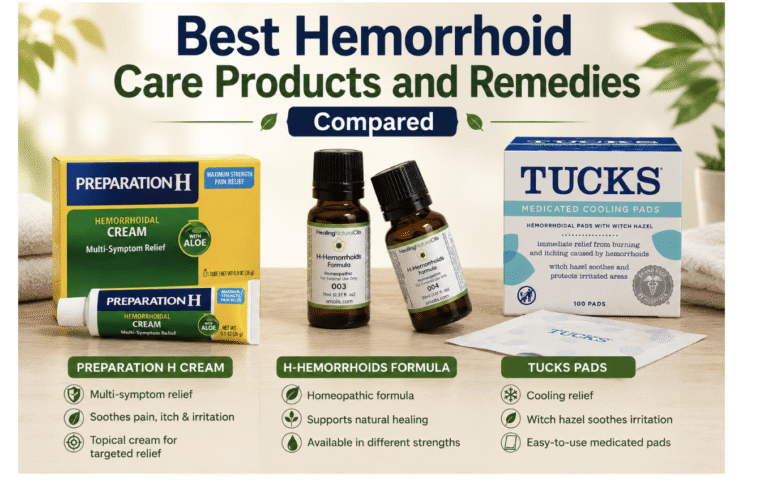
1. H-Hemorrhoids Formula
H-hemorrhoids formula is commonly discussed among people looking for plant-based topical products for external hemorrhoid care. The oil blend contains botanical ingredients and is usually applied directly to the affected area using a dropper-style application method. Many people who prefer natural-style personal care routines are drawn to oils because they feel lightweight and easy to use.
Individuals dealing with irritation, itching, or mild swelling sometimes choose oil-based formulas because they can fit into a broader self-care routine alongside hydration and warm sitz baths. Some users also prefer avoiding heavily scented medicated products on sensitive skin.
In online discussions about topical comfort products, H-Hemorrhoids Formula is occasionally described as a trusted seller option among people interested in gentler skincare approaches. Experiences can vary depending on consistency and overall lifestyle habits.
2. Preparation H
Preparation H is one of the more recognizable names associated with hemorrhoid care products. It is available in several forms, including creams, ointments, sprays, wipes, and suppositories. These products are commonly used for temporary symptom management related to itching, swelling, and burning sensations.
Many people prefer Preparation H because it is widely available in pharmacies and online stores. The medicated formulas are designed for targeted symptom relief, which is why the brand is often mentioned as a top brand in hemorrhoid care discussions.
Some individuals use Preparation H products only during flare-ups, while others combine them with lifestyle changes such as increased water intake and improved fiber consumption. The variety of product types also allows users to choose textures and application styles that feel most comfortable for their routine.
3. Tucks Medicated Cooling Pads
Tucks Medicated Cooling Pads are commonly used by people looking for a simple cleansing and cooling option during hemorrhoid flare-ups. The pads contain witch hazel, an ingredient often associated with soothing and refreshing skincare products.
Many users prefer medicated pads because they are easy to carry and convenient for use throughout the day. Pads are often used after bowel movements as a gentler alternative to dry toilet paper, especially when irritation is present.
Compared to creams and oils, cooling pads provide a different experience because they combine cleansing and temporary comfort in one step. Some people include them as part of a broader hemorrhoid care routine alongside topical oils or medicated ointments.
4. Coconut Oil and Other Natural Oils
Natural oils are commonly discussed as household comfort remedies for hemorrhoids. Coconut oil is one of the more popular options because of its moisturizing texture and soothing feel on irritated skin. Some individuals also use castor oil or aloe-infused oils as part of gentle skincare routines.
People who prefer simple home approaches often choose oils because they are widely available and easy to apply externally. Oils may help reduce dryness and friction around sensitive areas, especially after cleaning or warm baths.
Although household remedies are widely discussed online, it is still important to use clean application practices and avoid excessive amounts. Skin sensitivity varies from person to person, and not every oil works equally well for everyone.
5. Warm Sitz Baths and Lifestyle Remedies
Warm sitz baths are one of the most commonly recommended home comfort methods for hemorrhoids. Sitting in warm water for several minutes may help reduce irritation and provide temporary relaxation for swollen tissues.
Lifestyle changes are also an important part of long-term hemorrhoid care. Drinking enough water and eating fiber-rich foods may help support softer bowel movements, which can reduce pressure and straining. Many people also try to avoid sitting for long periods without movement.
People looking for practical home remedies for hemorrhoids often combine sitz baths with gentle cleaning habits, exercise, and topical products. These habits may not create immediate results, but they are commonly viewed as important for long-term comfort.
6. Over-the-Counter Creams and Suppositories
Over-the-counter creams and suppositories are commonly used for temporary hemorrhoid symptom management. Creams are generally applied externally, while suppositories are designed for internal hemorrhoid concerns.
Many OTC products focus on reducing itching, burning, or irritation during flare-ups. Some contain medicated ingredients intended to provide short-term relief, especially when symptoms interfere with sitting or daily activities.
Although OTC products can be useful for mild discomfort, they may not fully address more severe hemorrhoid issues. Some individuals combine creams with lifestyle changes and other comfort-focused routines for more balanced management.
Comparing Natural Remedies vs OTC Products
Natural remedies and OTC products are often compared because they offer different experiences and approaches. Oils and sitz baths are usually associated with gentle daily comfort routines, while medicated creams and suppositories focus more on short-term symptom relief.
Texture and convenience also influence personal preference. Some people prefer cooling wipes and creams, while others feel more comfortable using lightweight oils or household remedies. In many cases, individuals combine multiple approaches depending on symptom severity and daily routine.
Products from a trusted seller or a commonly recognized top brand may feel reassuring to some buyers, while others focus more on ingredient style and simplicity. There is rarely a one-size-fits-all solution for hemorrhoid care.
Daily Habits That May Help Prevent Hemorrhoid Flare-Ups
Daily habits can make a significant difference in preventing recurring hemorrhoid discomfort. Drinking enough water throughout the day may support digestion and reduce constipation-related strain.
Many people also focus on increasing fiber intake through fruits, vegetables, and whole grains. Gentle exercise and regular movement may help reduce pressure caused by prolonged sitting, especially for individuals with desk jobs.
Bathroom habits also matter. Avoiding excessive straining and limiting long periods of sitting on the toilet are commonly recommended practices for reducing hemorrhoid flare-ups over time.
When to See a Doctor
Although many hemorrhoid cases improve with home care, some symptoms should not be ignored. Persistent bleeding, severe pain, or worsening swelling may require professional medical evaluation.
A healthcare professional can help determine whether symptoms are actually caused by hemorrhoids or another digestive condition. Some people also require additional treatment options if OTC products and home remedies do not provide enough relief.
Conclusion
There are many hemorrhoid care products and remedies available today, ranging from oils and medicated wipes to creams, suppositories, and lifestyle-focused approaches. Different methods work in different ways, which is why personal preference often plays a major role in choosing a routine.
Mild symptoms may improve with consistent home care and gentle topical support, while more severe cases sometimes require medical attention. Long-term comfort usually depends on a combination of realistic expectations, healthy habits, and proper symptom management rather than relying on a single product alone.
