
Budgeting for a Pilgrimage: A Frugal Family’s Guide to Paying for Umrah and Hajj
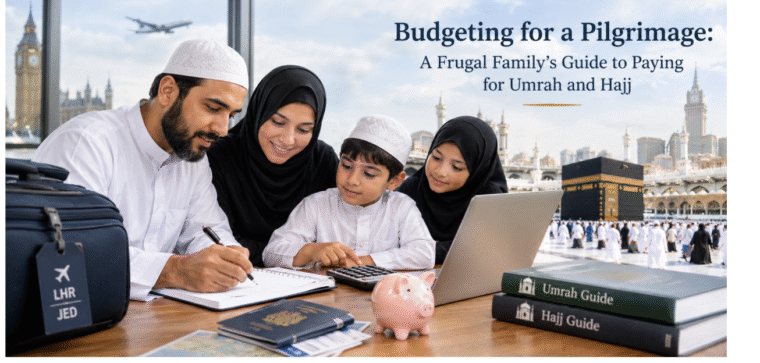
Frugal families are good at a certain kind of maths. They know which week the supermarket marks things down, which restaurants let kids eat free and how to turn a small saving into a big one by repeating it every month. For many Muslim families, those same skills end up pointed at one big goal: a pilgrimage to Makkah.
Umrah and Hajj are among the largest single expenses a family will ever plan for, but they’re also among the most predictable. You can find out the costs in advance, break them down and build a plan. Most UK families choose an All-Inclusive Umrah Package covering flights, visa, hotels and transfers, which makes the biggest costs easier to compare. This guide breaks down what a pilgrimage really costs, where the savings are, and how to build a realistic plan without debt.
How do you budget for Umrah?
- List every cost, including the ones not in the package, such as insurance and spending money.
- Pick your dates first, because timing changes the price more than anything else.
- Divide the total by the months until you travel and save a fixed amount on payday.
- Book early and pay in interest-free instalments where possible.
- Avoid borrowing with interest, which many Muslims prefer not to use at all.
What does an Umrah trip actually cost?
Prices vary hugely with the time of year, the hotel and how many people share a room, so it’s more useful to know the parts than one headline number. Here’s what goes into a typical trip, and where you can save on each.
| Cost | Usually in a package? | Where to save |
|---|---|---|
| Return flights | Yes | Travel outside school holidays; be flexible by a few days |
| Hotels in Makkah and Madinah | Yes | Share a room; pick a short walk rather than next door |
| Saudi visa | Often | Check it’s included before comparing prices |
| Transfers and train | Sometimes | Ask whether the Haramain train is included |
| Meals | Sometimes breakfast only | Eat where local workers eat; share large dishes |
| Vaccination | No | Compare GP and pharmacy prices early |
| Travel insurance | No | Buy when you book, and declare all conditions |
| Spending money and gifts | No | Set a gift budget before you go |
Which choices change the price the most?
1. When you go
This is the biggest factor. Ramadan, especially the last ten nights, and the Christmas holidays are the most expensive times. In 2027, Ramadan is expected to begin around early February. The cheapest periods are usually the quieter months outside UK school holidays, such as November and January, and summer, when Makkah is very hot.
2. How close your hotel is
Hotels right next to Masjid al-Haram charge a large premium. A good hotel ten minutes’ walk away can cost a lot less. For older pilgrims, though, a closer hotel can be worth every penny.
3. How many share a room
Packages are often priced for four people sharing. A couple in a double room will pay noticeably more per person. Families and friends who share can bring the cost down sharply.
4. What’s included
Two packages that look similar can differ by what they leave out. Always ask for a written list, and compare like with like.
How do you build a savings plan?
Once you know your total, the plan is simple frugal maths.
- Set a target. Add up the package price plus every extra in the table above.
- Choose a date. Count the months until you want to travel.
- Divide. That’s your monthly saving. If it’s too high, move the date back a few months.
- Automate it. Set up a standing order into a separate savings pot for the day after payday.
- Name the pot. Calling it “Umrah” makes it much harder to raid for other things.
Many families also use the traditional committee, an informal savings circle where friends pay in each month and take turns to collect the pot. It’s interest-free, but only join with people you trust.
A worked example
To show how the maths works, here’s an illustrative example. The figures are made up for the sake of the sums, not a quote. Say a couple works out that their package, insurance, vaccinations, spending money and gifts will come to £6,000 in total. If they want to travel in 18 months, they need to put aside about £333 a month. If that’s too much, stretching it to 24 months brings it down to £250.
Now say they cancel two unused subscriptions worth £25 a month, cut one takeaway a week saving around £80 a month, and switch their broadband for a saving of £15 a month. That’s £120 a month found without earning a penny more, nearly half of the monthly target. The rest can come from their regular budget. Seen this way, a trip that felt out of reach becomes a plan with a date on it.
Frugal habits that fund a pilgrimage
The same habits that save money on groceries and family days out can quietly build a pilgrimage fund.
- Cancel subscriptions nobody uses and move the money straight into the pot.
- Cut back on takeaways and put the difference aside each week.
- Ring up for better deals on phone, broadband and insurance renewals.
- Ask family to contribute to the trip instead of buying birthday or Eid presents.
- Sell things you no longer need, and save the proceeds.
What about Hajj?
Hajj is a much larger commitment, both spiritually and financially. For British residents, Hajj Packages from UK are now booked through Saudi Arabia’s official Nusuk Hajj platform. You register, wait to find out whether you’ve been given one of the UK’s limited places, and then choose and pay for a package within a short window, often about a week to ten days. That short window is one more reason to have your savings ready well in advance.
According to a 2026 guide from Wise, approximate Nusuk package prices for UK pilgrims look like this:
| Nusuk Hajj tier (approx.) | Price per person | What it typically includes |
|---|---|---|
| Standard | £4,500 to £5,500 | 3-star hotels, minimum 14 days |
| Premium | £5,500 to £9,500 | 4-star hotels, 10 to 14 days |
| Luxury | £8,000 to £12,000+ | 5-star hotels, 10 to 14 days |
Some costs, such as permit fees, the sacrifice and insurance, may be extra. Hajj 2027 is expected around mid-May, and registration for the new season is likely to open towards the end of 2026. Treat these figures as a guide and check the official platform for current prices.
How can you pay without going into debt?
For many Muslims, borrowing with interest is something to avoid altogether, and starting a spiritual journey with a growing debt takes away some of its peace. Some better options:
- Interest-free instalments. Many travel firms let you pay a deposit and spread the rest over several months.
- Islamic savings accounts. A handful of UK banks offer savings accounts that pay an expected profit rate rather than interest.
- Card payments for protection. Paying by card can give extra protection if something goes wrong, as long as you clear any balance straight away.
Whatever you choose, make sure your travel firm holds an ATOL licence, which you can check on the Civil Aviation Authority website.
Costs people forget
- Travel to and from the UK airport, and parking
- The meningococcal ACWY vaccination, which you may need to pay for
- Travel insurance with medical cover, as your UK health card won’t work in Saudi Arabia
- Extra baggage for dates, Zamzam and gifts on the way home
- Charity you’d like to give while you’re there
Frequently asked questions
What is the cheapest time to go for Umrah from the UK?
Usually the quieter months outside school holidays and Ramadan, such as November and January, or summer if you can cope with the heat.
How much does Hajj cost from the UK?
According to Wise’s 2026 guide, Nusuk Hajj packages range from about £4,500 to over £12,000 per person, depending on the tier.
How do UK residents book Hajj?
Through Saudi Arabia’s official Nusuk Hajj platform.
Can I pay for Umrah in instalments?
Many travel firms offer interest-free instalments after a deposit. Ask before you book.
Key takeaways
- Break the trip into parts and budget for extras as well as the package.
- Timing, hotel distance and room sharing change the price most.
- Save a fixed monthly amount automatically, and avoid interest-based debt.
- Hajj packages via Nusuk range from about £4,500 to £12,000+, per Wise.
Sources and further reading
Wise, “Hajj Visa UK: Requirements and Application Guide” (2026); the official Nusuk and Nusuk Hajj platforms; GOV.UK foreign travel advice for Saudi Arabia; the Civil Aviation Authority ATOL checker.
A pilgrimage is the one big purchase most families never regret. With the same patience you’d bring to any savings goal, it can move from “one day” to a date on the calendar.
