
6.7 Cummins Belt Diagram: Serpentine Routing With AC Explained
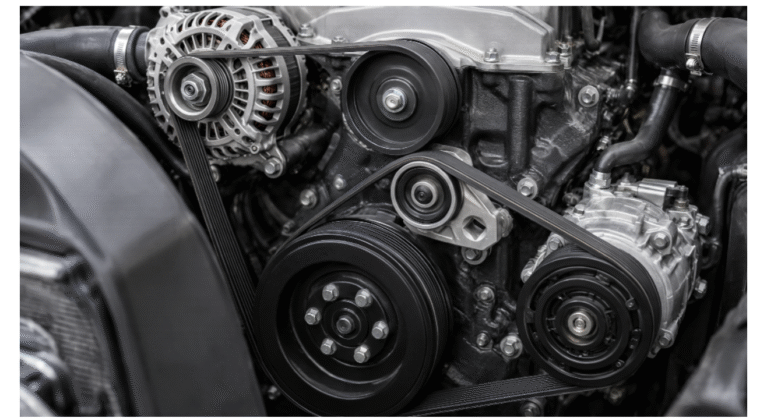
On a 6.7 Cummins, the serpentine belt wraps around the crankshaft damper, fan drive pulley, water pump, alternator, AC compressor, tensioner, and idler pulleys all at once. If you route it wrong, the belt can slip off, overheat, or snap. Getting the diagram right before you start means you only have to stretch a new belt over the tensioner once.
What the 6.7 Cummins Serpentine Belt Drives
On Ram applications, the serpentine belt drives most of the accessories on the front of the engine. The power steering pump is the main exception. It is gear-driven off the engine’s front gear train, so it is not on the belt. The standard accessory layout includes the crankshaft damper pulley, fan drive pulley, water pump, alternator, AC compressor, automatic belt tensioner, and one or more idler pulleys. The exact routing depends on the model year, whether the truck has dual alternators, and which accessory drive configuration the engine shipped with.
Ram 2500 and 3500 trucks with the 6.7 Cummins from 2007.5 onward share a similar belt routing across many model years. The ribbed side of the belt drives the grooved pulleys: the crankshaft, fan drive, alternator, and AC compressor. The smooth back side runs against the tensioner, smooth idlers, and any accessory driven off the back of the belt. On many 6.7 Ram routings, that includes the water pump. The rule is simple. Ribs go on grooved pulleys, and the smooth back goes on smooth pulleys. If a smooth pulley meets the ribbed side, or ribs are forced onto a smooth pulley, the belt wears out fast and may slip under load.
6.7 Cummins Serpentine Belt Diagram With AC
For a single-alternator 6.7 Cummins with AC, the belt routing follows this typical path. Always confirm it against the routing sticker for your exact year.
- Start at the crankshaft damper pulley, ribbed side of the belt contacting the pulley.
- Route up to the fan drive pulley, ribbed side.
- Continue to the alternator pulley, ribbed side.
- Route to the first smooth idler near the alternator, smooth side of the belt against the pulley.
- Route to the AC compressor pulley, ribbed side.
- Route across the water pump pulley and the second idler if equipped. On many 6.7 Ram routings, both of these contact the smooth back side of the belt.
- Finally, route to the automatic tensioner pulley, smooth side.
The tensioner is spring-loaded and does not adjust manually. To release tension, rotate it with a breaker bar or serpentine belt tool. Route the belt over all pulleys, then slowly release the tensioner so it takes up the slack. The tensioner arm has a built-in square drive hole for this purpose, typically 1/2-inch on Ram 6.7 applications.
On 6.7 Cummins engines with factory dual alternators, the second alternator mounts on its own bracket. The belt is longer and the routing is different. Belt length and path change by model year, so do not assume a single-alternator diagram will fit. Check the routing sticker under the hood. If the original sticker is missing, confirm the belt part number by VIN or use the factory service information for your year.
When Should You Replace the Belt
Ram’s maintenance schedule calls for inspecting the serpentine belt at regular service intervals and replacing it when wear shows. An old belt usually slips before it snaps. The first sign may be a squeal at startup that goes away once the engine warms up. Belt material hardens with heat cycles and age, and a hardened belt grips poorly, especially in cold weather.
Look for the following signs.
- Multiple cracks running across the ribs. Modern EPDM belts rarely crack, so a belt with no cracks can still be worn out.
- Glazing on the ribbed side that makes the belt shiny.
- Missing chunks or frayed edges.
- Worn ribs that let the belt sit deep in the pulley grooves instead of riding near the top. A belt wear gauge checks rib depth faster than eyeballing it.
Replace a belt that has been soaked with coolant from a leaking water pump or oil from a front seal, even if the rubber still looks decent. The contamination soaks into the material and reduces grip permanently.
At 6:00 on a cold morning, a brief chirp from the belt as the engine catches is a fair warning. It may run quiet for weeks after that. Then one afternoon under full load, the belt slips enough to slow the water pump and fan, and the temperature gauge starts to climb. Checking the belt takes two minutes. Ignoring the noise can strand you on the shoulder.
Tensioner and Idler Pulley Inspection
The belt tensioner does more than keep the belt tight. It also absorbs vibration and keeps tension consistent as the belt wears. A worn tensioner may still hold the belt in place at idle but let it flutter or slap at higher RPM.
Check the tensioner for the following.
- Rust or corrosion around the pivot point.
- A rough or noisy bearing when you spin the pulley by hand with the belt removed.
- A tensioner arm that does not return smoothly when rotated and released.
- The wear indicator marks on the tensioner body. If the arm sits outside the normal range, either the belt is worn, or the wrong length, or the tensioner spring has weakened.
Smooth idler pulleys fail most often at the bearing. With the belt removed, spin each idler by hand. Replace a pulley that grinds, feels rough, wobbles, or coasts on and on with no resistance, since that usually means the grease is gone. A good bearing should feel smooth with light, even resistance from the grease inside.
How to Replace the 6.7 Cummins Serpentine Belt
Removing the old belt and installing a new one follows the same routing.
- Take a photo of the belt routing before removing anything. The sticker under the hood may be faded, missing, or covered in dirt.
- Insert a breaker bar or serpentine belt tool into the tensioner square drive hole.
- Rotate the tensioner to release belt tension. The tensioner arm moves in the direction that relieves pressure on the belt.
- Slip the belt off a smooth idler or the easiest-to-reach pulley first, then release the tensioner slowly.
- Remove the belt from the remaining pulleys.
- Route the new belt over all pulleys except the last smooth pulley, following the diagram. That last pulley is usually the tensioner or an idler.
- Double-check that the ribbed side contacts every grooved pulley and the smooth side contacts every smooth pulley.
- Rotate the tensioner again and slip the belt over the last pulley.
Start the engine and watch the belt track. It should run centered on every pulley. If it walks toward one edge, stop the engine immediately. A misaligned belt can shred in seconds.
What Else to Check While the Belt Is Off
With the belt removed, this is a good time to check a few items that are hard to reach otherwise.
- Spin the alternator pulley by hand and listen for bearing noise.
- Wiggle the water pump pulley to check for play in the shaft bearing.
- Spin the AC compressor pulley. With the clutch disengaged, it should spin freely and quietly on its own bearing. The clutch hub turns the compressor itself, so expect some resistance there, but no grinding.
- Check for coolant residue around the water pump weep hole.
- Look for oil seepage around the front crankshaft seal.
Replacing a failing pulley now saves you another belt removal later. Often a new belt goes back on with the old tensioner and idlers. Skipping the tensioner saves a few dollars today, but it also means you’ll likely be back at the front of the engine sooner than expected.
For Ram owners maintaining their own trucks, installing a new belt, tensioner, and idler pulleys together as a set can reduce the chance of accessory drive problems for another 100,000 miles. Quality aftermarket Cummins parts that match OE specifications are available from several suppliers. Matching parts to the exact engine year and accessory configuration avoids fitment issues.
Final Words
The 6.7 Cummins serpentine belt diagram with AC follows a consistent pattern across most Ram applications. The ribbed side drives the crankshaft, fan drive, alternator, and AC compressor. The smooth back side runs on the idlers, the tensioner, and, on many configurations, the water pump.
Before removing the old belt, take a photo. Inspect the tensioner and idler pulleys while the belt is off. Replace the belt at the first sign of worn ribs, glazing, or contamination. A belt that slips under load slows the water pump and fan and can quickly push coolant temperature up.
