
Which Is More Budget-Friendly: Solid Wood or Laminate Kitchen Cabinets?
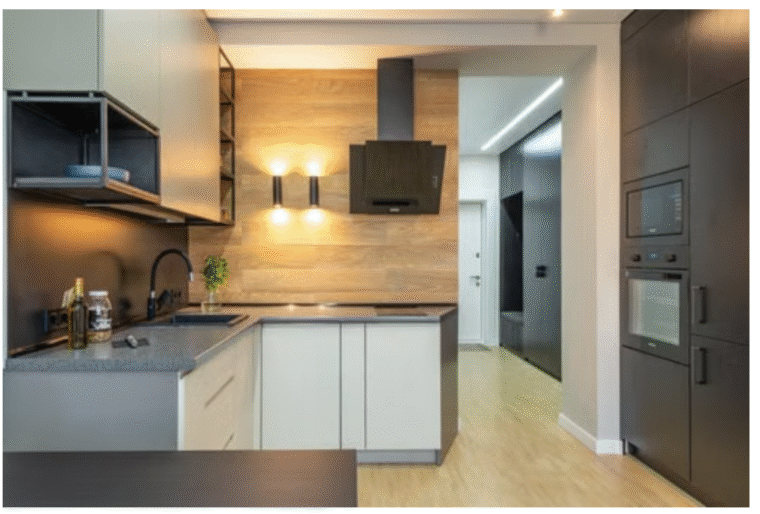
Laminate cabinets are the more budget-friendly option at purchase, often costing far less than solid wood. Solid wood costs more upfront, but it can be sanded, refinished, and repaired for decades. The better value depends on how long you plan to stay and how hard your kitchen works.
Price tags only tell part of the story when comparing solid wood vs laminate kitchen cabinets. What sits under the surface, how each material handles moisture, and how easily it can be refreshed all shape the real cost.
This guide breaks down upfront prices, long-term costs, and which option suits different budgets.
What You Are Actually Paying For
Cabinet labels can be misleading, so it helps to know what each name really means.
Laminate Cabinets
Laminate cabinets have a thin decorative layer bonded to a core of particleboard or medium-density fiberboard (MDF). Because the core is made from wood fibers and resin, manufacturing costs stay low. The EPA sets formaldehyde emission limits for these engineered cores, so look for a “TSCA Title VI compliant” label.
Solid Wood Cabinets
Cabinets sold as solid wood usually have solid wood doors and face frames, while the boxes are often plywood. Oak and maple sit at the lower end of the price range, while cherry and walnut cost more. Custom sizing, detailed door styles, and hand-applied finishes raise the price further.
Upfront Cost Comparison
The price gap between the two materials is widest on the day you buy.
Cabinet Prices by Material
Angi’s 2024 cost data put laminate cabinets at about $4,000 to $15,000 and wood cabinets at $5,000 to $25,000 or more. In general, plywood cabinets with solid wood doors typically cost more than laminate or MDF cabinets. The ranges overlap because a high-end laminate line can cost more than a basic wood one.
Installation Costs
According to Angi, professional installation typically costs $50 to $450 per linear foot. Stock cabinets cost the least to install, while custom builds push labor toward the higher end. If choosing solid wood moves your project into semi-custom or custom cabinetry, expect the installation bill to rise as well.
Long-Term Costs That Change the Math
A lower purchase price does not always mean a lower lifetime cost.
Moisture and Repairs
Particleboard cores can swell if water gets past a chipped edge, especially under sinks and near dishwashers. Once swollen, the panel usually needs replacing rather than repairing. Solid wood reacts to humidity too, since the USDA Forest Products Laboratory explains that wood exchanges moisture with the surrounding air, but its dents and scratches can be sanded out.
Refinishing vs. Replacing
Angi reports that refinishing cabinets costs about $3,116 on average, compared with $2,000 to $11,000 to replace them. Solid wood can be restained or repainted several times, which keeps it eligible for the cheaper option. Laminate is harder to refinish, so a style update or damaged doors often means replacement.
Which Option Fits Your Budget?
When weighing solid wood vs laminate kitchen cabinets, match the material to your plans for the home.
- Choose laminate if you are updating a rental, preparing a home for sale, or working with a tight budget.
- Choose solid wood if you plan to stay for many years and want cabinets you can refinish.
- Consider a hybrid with plywood boxes and solid wood doors to get a wood look at a lower price.
Key Takeaways
- Laminate cabinets cost less upfront and suit short-term or tight budgets.
- Most “solid wood” cabinets combine solid wood doors with plywood boxes.
- Semi-custom and custom cabinets cost more to install, which can widen the price gap.
- Water damage to particleboard cores usually means replacement, not repair.
- Refinishing solid wood costs far less than replacing a full set of cabinets.
