
How Home Renovations Can Impact Your Homeowners Insurance Premium
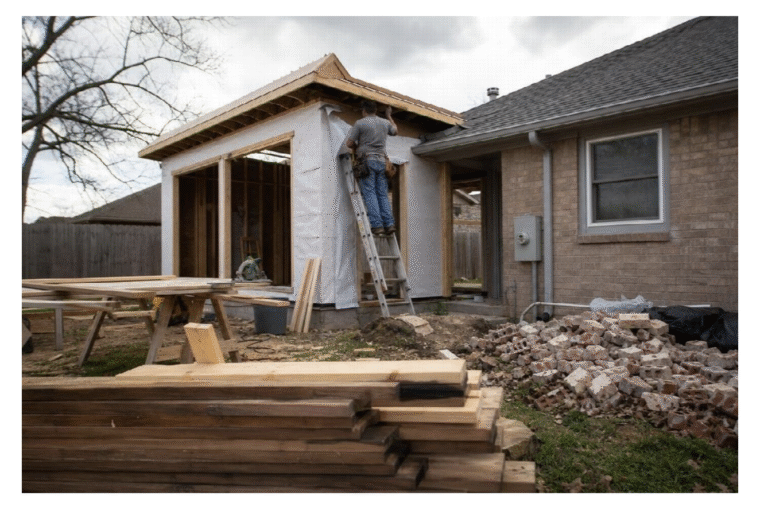
Home renovations alter a property’s replacement cost value and liability exposure in ways that directly affect homeowners insurance premiums. Policyholders who complete significant improvements without notifying their insurer risk carrying inadequate policy limits or voiding coverage at claim time.
Barger & Associates, an independent agency founded in 2012 and based in Southlake, Texas, has earned multiple D Magazine Best in DFW recognitions for helping homeowners align coverage with the true post-renovation value of their properties.
How Do Home Renovations Affect Your Homeowners Insurance?
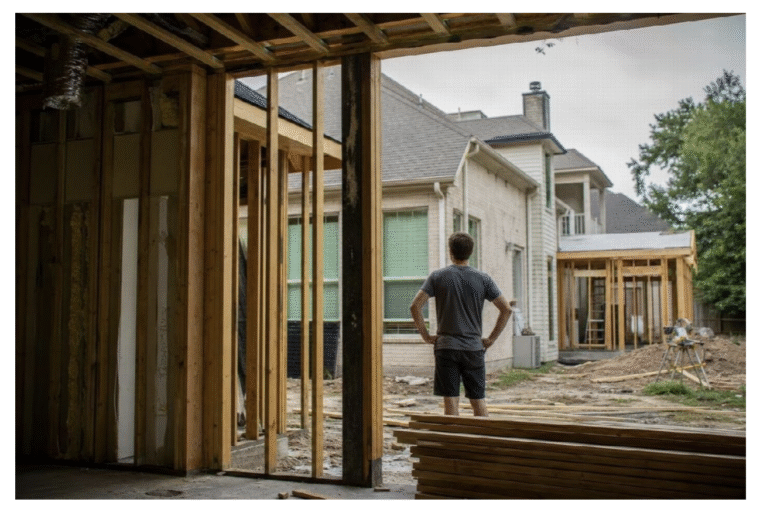
Renovations change a home’s replacement cost value (RCV), the estimated cost to rebuild to its current standard using comparable materials and labor. On a standard HO-3 policy, Coverage A limits are set against this figure, so any structural addition, material upgrade, or square footage change can leave pre-renovation limits below the actual rebuild cost.
Failing to notify an insurer after significant work creates underinsurance. In Southlake, where custom homes are frequently valued from the high six figures into seven figures, a kitchen remodel or structural addition can widen that gap by tens of thousands of dollars. Structural alterations also shift liability provisions; a finished basement, new deck, or expanded living area each introduce distinct exposures. Barger & Associates’ homeowners insurance policy reviews address these post-renovation coverage gaps throughout Texas.
How Do Renovations Change Replacement Cost and Policy Limits?

Renovations change replacement cost and policy limits by increasing the materials, finishes, or square footage an insurer must account for when calculating a rebuild. RCV, policy limits, and endorsement structures all require reassessment when a home’s material quality or footprint changes.
Dwelling Coverage and Replacement Cost Valuation
A standard HO-3 policy structures Coverage A around RCV with no deduction for depreciation. When a kitchen remodel introduces custom cabinetry, quartz countertops, or high-end appliances, the RCV increases and existing limits may no longer cover a total loss. Premium residential markets across North Texas, Southlake, Colleyville, Keller, and Grapevine, carry above-average rebuild costs due to custom finishes and larger footprints.
Extended Replacement Cost Endorsements
An extended replacement cost endorsement expands the dwelling limit by a specified percentage, commonly 25 to 50 percent, above the stated Coverage A amount when reconstruction costs exceed that limit. Homeowners who complete a renovation increasing material quality or finished square footage should request this endorsement, since standard limits rarely adjust automatically. The endorsement also buffers against construction cost volatility in high-demand North Texas labor markets.
Temporary Coverage During Active Construction
During renovation, a standard HO-3 policy may not fully protect the project. Materials stored on-site, partially open structures, and a vacant dwelling can fall outside standard coverage. A builder’s risk or course of construction policy covers materials and work in progress against fire, theft, and weather. Homeowners should confirm their contractor carries general liability and workers compensation coverage to avoid third-party claim exposure.
When Policy Limits Become Inadequate After a Renovation
If a homeowner adds a 500-square-foot addition without updating the dwelling limit, the insurer may calculate the covered loss payout proportionally, leaving the policyholder responsible for the gap. Policyholders should contact their agent after any renovation exceeding a material cost threshold to request an updated replacement cost estimate and confirm Coverage A limits align with the post-renovation rebuild value.
What Steps Should You Take Before, During, and After a Renovation?

Before, during, and after a renovation, homeowners should notify their agent, document the property, update the replacement cost estimate, review personal property sublimits, and evaluate liability coverage for new structures.
Step 1: Notify the Insurance Agent Before Construction Begins
Policyholders should contact their agent before demolition or construction starts. Standard HO-3 policies may exclude or limit coverage for dwellings that become vacant during a build phase, making a builder’s risk policy or construction endorsement necessary. Early notification also gives the agent time to confirm that permits required by the City of Southlake are reflected in the coverage record.
Step 2: Document the Pre-Renovation Condition of the Property
Photographs and a written inventory of existing fixtures, finishes, and structural elements should be completed before demolition. This baseline supports accurate loss claims if damage occurs during renovation and prevents valuation disputes. Keep copies stored off-site or in the cloud so they survive a total loss.
Step 3: Request a Replacement Cost Estimate Update After Completion
Once the project is finished, the insurer should recalculate dwelling replacement cost using current construction cost data specific to the Southlake market, where regional labor and materials pricing can shift substantially.
Step 4: Review Personal Property Sublimits for New High-Value Acquisitions
Custom appliances, fine art, or specialty fixtures purchased as part of the renovation should be evaluated against existing personal property sublimits. Where standard sublimits fall short, a scheduled personal property endorsement or valuable personal property coverage provision may be warranted.
Step 5: Evaluate Liability Coverage for New Structures
Pools and outdoor living spaces are common additions in Southlake and nearby communities such as Trophy Club, Frisco, and Flower Mound. A swimming pool raises liability exposure and often triggers HOA and fencing requirements in Carroll ISD neighborhoods. The personal liability limit on the existing HO-3 policy should be reviewed, and an umbrella insurance policy considered for excess liability protection.
Frequently Asked Questions
Will My Homeowners Insurance Premium Automatically Go Up After a Renovation?
Not automatically, but premiums often increase once the insurer updates the policy to reflect the higher replacement cost. The adjustment depends on the scope of work, materials used, and how much the dwelling coverage limit changes. Requesting a premium estimate before finalizing a renovation budget avoids surprises.
Does Adding a Pool or Hot Tub Require a Separate Insurance Policy?
A separate policy is rarely required, but adding a pool or hot tub almost always triggers the need for higher liability limits on the existing homeowners policy. Many insurers also require a fence or locking cover before extending coverage. An umbrella policy is worth considering given the elevated injury risk these amenities carry.
Are Renovations Done Without a Permit Covered If Something Goes Wrong?
Unpermitted work creates serious coverage risk. If a loss is traced back to unpermitted electrical, plumbing, or structural changes, the insurer may deny the claim or significantly reduce the payout. Some policies include ordinance or law exclusions that limit coverage for work not completed to current building code standards. All permits should be pulled before construction begins.
How Long After a Renovation Should I Wait Before Calling to Update My Policy?
Contact your agent as soon as the project reaches substantial completion. Gaps between project completion and policy updates leave an improved home underinsured. A coverage adjustment can typically be processed quickly with a contractor summary or updated appraisal.
Does My Policy Cover Damage Caused by the Contractor During the Renovation?
Contractor-caused damage is generally the responsibility of the contractor’s own general liability policy. If the contractor is uninsured or underinsured, the homeowners policy may be the only available resource, and coverage is not guaranteed. Always request a certificate of insurance from any contractor and verify the policy is active.
Can I Get a Discount on My Homeowners Insurance After Upgrading My Roof or Electrical System?
Many carriers offer premium credits for upgrades that reduce risk, including new impact-resistant roofing, updated electrical panels, and modern plumbing. The discount amount varies by insurer and the specific materials or systems installed. Barger & Associates can review completed renovation details and shop the policy to find carriers that reward those improvements.
What Happens to My Coverage If My Home Is Unoccupied During a Long Renovation?
Standard homeowners policies typically limit or exclude coverage for homes left vacant beyond 30 to 60 days, depending on the carrier. If a renovation requires vacating the property for an extended period, a vacancy permit or separate vacant property endorsement may be needed to maintain protection.
About Barger & Associates
Barger & Associates is an independent insurance agency founded in 2012 by Joshua Barger, located at 170 Players Cir, Southlake, TX 76092. As an independent agency, it shops coverage across multiple carriers on the policyholder’s behalf, a meaningful advantage when comparing dwelling limits and endorsements after a renovation.
The agency provides auto, homeowners, life, umbrella, and business insurance throughout the Dallas-Fort Worth region and has earned multiple D Magazine Best in DFW awards and the Allstate Agency Achievement Award.
Business Name: Barger & Associates: Allstate Insurance
Address: 170 Players Cir, Southlake, TX 76092
Phone Number: (972) 206-1234
