
HANDS-ON RF WITHOUT THE DOWNTIME STORY CLINICS KEEP HEARING
Radiofrequency is everywhere on medspa menus, yet many clinics still struggle to sell it with confidence. Patients hear “RF” and picture either a disposable tip that feels clinical and sharp, or a vague machine-based session that ends with redness and a recovery story they did not budget for. Operators hear the same word and think of consumable costs, tip inventory, and a treatment that competes awkwardly with injectables on the same calendar.
There is a different RF category worth evaluating: hands-on delivery with real-time temperature control, built for face and body, and positioned for progressive improvement without a downtime narrative. That is not a claim that RF replaces surgery or lasers. It is a business and protocol argument about how energy is delivered, how patients experience the visit, and where the service sits on a profitable menu.
WHAT HANDS-ON RF ACTUALLY MEANS
Hands-on RF is not a synonym for “massage with a warm probe.” Clinically, it refers to capacitive and resistive energy pathways delivered through practitioner-controlled handpieces, often paired with electrostimulation protocols where appropriate. The proviThat differs from RF microneedling in both patient experience and operational profile. RF microneedling creates controlled micro-injury with insulated or non-insulated needles; it can be highly effective for texture and scars, but it typically brings tip costs, more pronounced post-treatment downtime, and a consent conversation that sounds invasive. Hands-on RF, by contrast, is sold as a non-invasive energy session: no needles, no tip consumable theater, and a recovery story that fits a lunch-break lifestyle when protocols are followed.
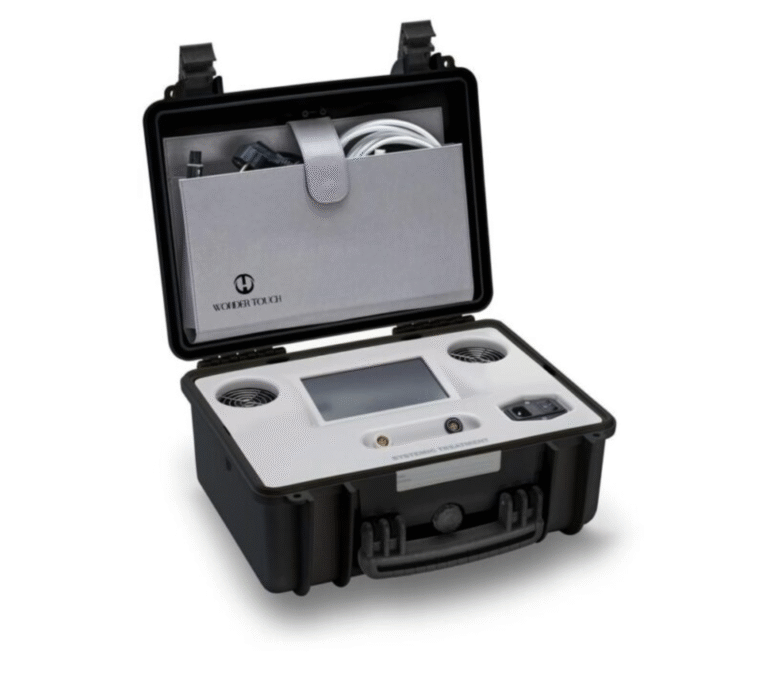
XOD’s hands-on RF aesthetic device , Wonder Touch, sits in this category: capacitive and resistive bioenergy with electrostimulation options, intelligent temperature control, face and body programs, and published financing from about $1,150 per month on a ~$59,995 Tier One medical price (tax and freight excluded). FDA clearance in March 2025 is part of the published record practices should verify during diligence.
The practitioner value is control. When energy delivery depends on handpiece technique plus temperature feedback, experienced providers can customize intensity without turning every visit into a “how red will I be” negotiation. The business value is menu clarity: you are offering a premium, progressive RF experience—not a commodity tip procedure competing on discount packages.

FACE VS BODY PROTOCOLS WITHOUT OVERSELLING
Face and body are not the same appoinWhat clinics should standardize is photography, consent language, and series structure. RF results in this category are commonly framed as progressive: visible change can begin early for some patients, with continued improvement across a planned series. That is not a promise of overnight transformation. It is why packages outperform one-off “try it” pricing for utilization and outcomes tracking.
Avoid blending face and body into one vague SKU. Price and schedule them separately. A mid-face firming protocol and a thigh contour protocol compete for different chair times and different marketing messages. If your front desk cannot explain the difference in two sentences, the menu is too soft to protect ASP.
Also keep medical boundaries clear. Hands-on RF is not a substitute for ablative resurfacing, surgical lifting, or medically indicated dermatologic care. Screen for contraindications, pregnancy status where relevant, implanted devices, and active skin disease. Temperature control reduces risk; it does not replace consultation.
COMFORT AND TEMPERATURE CONTROL AS THE SALES ENGINE
Patients cancel less when the visit feels controlled. Real-time temperature monitoring and intelligent power adjustment are not luxury features—they are how you keep energy high enough to matter without drifting into discomfort that kills rebooking.
Document settings by zone and visit number. Progressive enhancement only works if visit two builds on visit one instead of restarting from guesswork. Temperature logs and photo consistency matter more than another brochure claim. Clinics that skip documentation usually blame the device when the real issue is protocol drift between providers.
WHERE HANDS-ON RF BELONGS ON THE MENU
Place it as a core non-invasive energy offering—not as a filler facial and not as a mini-surgery alternative. Strong placements include:
– Standalone face firming series for patients not ready for needles
– Body firming and contour-support packages with clear photo endpoints
– Maintenance after lasers or injectables once healing windows allow, when clinically appropriate
– Membership or membership-adjacent cadence for patients who want ongoing texture and tone care
Financing math should be explicit in the ownership discussion. At roughly $1,150 per month against a ~$59,995 device price, break-even is a sessions-per-week problem. Model labor, room time, and marketing; then set utilization targets before the install date—not after the first quiet month.
WHO SHOULD START HERE
Start with hands-on RF if your practice needs a premium non-invasive layer that feels differentiated in the chair, scales across face and body, and avoids the downtime story that blocks same-week rebooking for many patients. It is a strong fit for medspas expanding beyond injectables without immediately adding another ablative or needle-based capital line.
It is a weaker first buy if your demand is overwhelmingly scar revision or deep textural work that already converts to RF microneedling, or if you lack providers willing to develop hands-on technique. Technology does not replace skill in this category—it rewards it.
Practical next step: run a two-week consult audit. Count how many patients asked for “tightening without downtime,” how many declined microneedling because of recovery, and how many body contour inquiries stalled on invasiveness. If those numbers are material, evaluate a temperature-controlled, hands-on RF platform with clear face/body protocols and FDA clearance documentation—then build the series pricing before the machine arrives.
Price against the experience and the series, not against RF microneedling tip cost. Your cost structure is different: less tip burn, more provider time skill. Protect that by packaging six- or eight-visit plans with defined assessment points rather than endless à la carte discounting.
Train providers to narrate the feedback loop briefly: target temperature range, why the handpiece moves, what “warm working heat” should feel like, and when to pause. That script turns comfort from a hope into a protocol. It also differentiates you from generic RF pitches that only talk about collagen in the abstract.
tment dressed in different room lighting. Facial protocols typically emphasize firming and revitalization across upper, middle, and lower face zones, with session lengths often in the 30–60 minute range depending on the program. Body protocols target firming, contour support, and cellulite-oriented work with different handpiece strategies and longer surface areas.
der stays in contact with tissue, adjusts technique by feel and feedback, and uses temperature monitoring to keep energy in a productive range.
