
Why Do Some Children Prefer to Sit in the W Position?
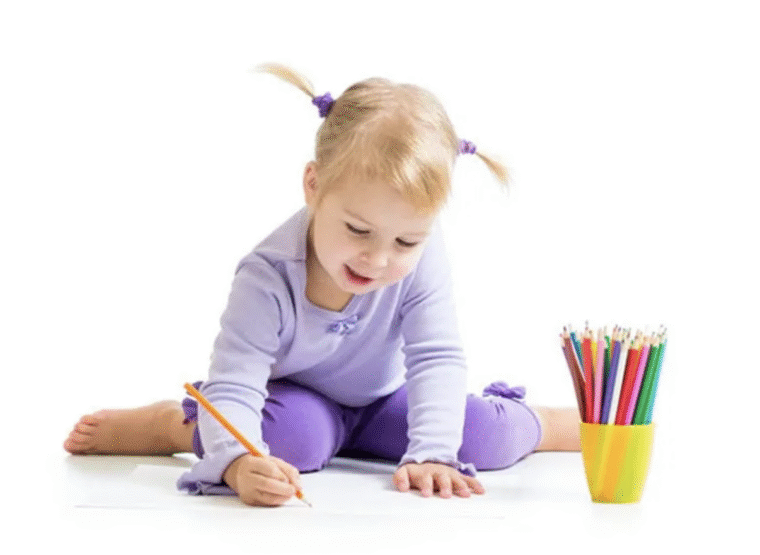
Children use many different positions when playing on the floor. One that often attracts parents’ attention is the W position, where a child sits on their bottom with their knees bent in front and their feet positioned outside their hips, creating a shape similar to the letter W. Seeing W-sitting in children can lead parents to wonder whether the position is simply comfortable or whether it indicates something that needs attention.
Occasionally using this position does not necessarily mean there is a problem. Children naturally experiment with different ways of sitting as they play and develop. What can be more useful is observing how frequently a child uses the position, whether they comfortably move into other positions and whether there are any broader concerns about their movement or development.
W-Sitting Can Provide a Wide Base of Support
One reason some children may prefer W-sitting is that it creates a relatively wide and stable base while they are playing. When sitting this way, the legs provide support around the body. This can allow a child to concentrate on using their hands for activities such as building blocks, drawing or playing with toys without needing to make as many adjustments to maintain their sitting position. Children who find other sitting positions more physically demanding may therefore return to the W position because it feels stable and familiar.
Stability itself is not necessarily a negative thing. Children need secure positions to explore toys and participate in floor activities. However, movement development also involves learning to control the body in different positions and move efficiently between them. This is why observing the variety of positions a child uses can be more informative than focusing on a single sitting posture.
Flexibility and Individual Anatomy Can Play a Role
Children vary considerably in their flexibility and joint movement. A sitting position that feels uncomfortable to one child may feel completely natural to another. The hips play an important role in W-sitting because the position involves a particular orientation of the legs. Differences in hip rotation and general flexibility can influence how easily a child moves into and maintains the position. Young children are also typically more flexible than adults, which can make positions that look unusual to parents feel relatively comfortable to them.
Individual anatomy is only one part of the picture. Strength, balance, coordination, habits and the activity being performed can all influence how a child chooses to sit. For this reason, parents should avoid comparing one child’s sitting posture too closely with another’s. Development occurs at different rates, and individual movement patterns can vary considerably.
Strength and Balance May Influence Sitting Preferences
Maintaining an upright sitting position requires coordination between different muscle groups. The trunk helps stabilise the body while the hips and legs contribute to balance and positioning. Some children may choose positions that provide additional external stability while they concentrate on play. A wider base can reduce the amount of balance adjustment required compared with some narrower sitting positions. This does not automatically mean a child has weak core muscles. Sitting preference alone is not enough to determine strength or diagnose a developmental problem.
Instead, parents can observe how the child manages other everyday movements. Can they move comfortably between the floor and standing? Do they participate in age-appropriate physical play? Can they use several different sitting positions? Looking at overall movement provides much more useful information than judging physical ability from W-sitting alone. If there are broader concerns involving balance, coordination, strength or movement, a health professional can assess these areas more appropriately.
Different Sitting Positions Encourage Different Movements
Children commonly move through several positions during floor play. They may sit cross-legged, place both legs to one side, kneel, squat or sit with their legs extended in front. Each position changes how the body is supported and how easily the child can reach, rotate or move to another activity. For example, some sitting positions encourage a child to rotate their trunk when reaching for a toy beside them. Changing positions may also require them to shift their weight, use their hands for support and coordinate their legs.
Variety therefore gives children opportunities to experience different movement patterns. Parents do not necessarily need to constantly correct a child every time they briefly move into a W position. Instead, they can create opportunities for different types of sitting and movement throughout play. Placing toys in different locations, encouraging active games and providing varied floor activities can naturally prompt children to change position.
When Frequent W-Sitting May Be Worth Discussing
Parents may want to seek professional advice if W-sitting is almost always the child’s preferred floor position and they appear uncomfortable or unable to use alternatives. The sitting position becomes more relevant when it appears alongside other concerns. These might include difficulties with balance, frequent falls, unusual walking patterns, challenges moving between positions or noticeable differences between the two sides of the body. Pain is another reason to seek advice. A child who reports discomfort or avoids certain movements because they hurt should be appropriately assessed.
Parents may also have concerns about broader developmental skills, including participation in play or everyday activities. In these situations, it can be helpful to discuss the overall pattern rather than asking whether W-sitting itself is “good” or “bad.” An occupational therapist, physiotherapist, GP or other appropriate health professional can consider the child’s individual development and determine whether further assessment is necessary.
Encourage Movement Variety Without Creating Anxiety
Parents can support movement development by giving children plenty of opportunities for active and varied play. Floor activities can be arranged so children need to reach in different directions, change position and move between toys. Outdoor play, climbing, walking and age-appropriate physical activities can also expose children to a wide range of movements. If a child frequently W-sits, parents can gently suggest another comfortable position without turning sitting posture into a source of stress. Cross-legged sitting, side sitting, kneeling or sitting with the legs forward may be alternatives depending on what is comfortable for the child.
The aim is not to enforce one “perfect” sitting posture throughout the day. Children naturally move, shift and experiment with different positions. It is also important to remember that online information cannot assess an individual child’s development. If parents are concerned about how their child moves, professional assessment provides a more useful picture than focusing on one behaviour in isolation.
Conclusion
Some children prefer the W position because it feels comfortable and provides a stable base for floor play. Flexibility, anatomy, balance, habits and the activity being performed can all influence this preference. Occasional W-sitting does not by itself provide enough information to determine whether a child has a developmental or physical problem. It is more useful to observe whether the child uses a variety of positions and how they move during other everyday activities.
When W-sitting is persistent and accompanied by pain, movement difficulties or broader developmental concerns, parents can discuss their observations with an appropriate health professional. The goal should be to understand the child’s overall movement and participation rather than focusing exclusively on the shape of one sitting position.
