
Beyond the Garage: 7 Home and Yard Jobs for a Cordless Impact Wrench
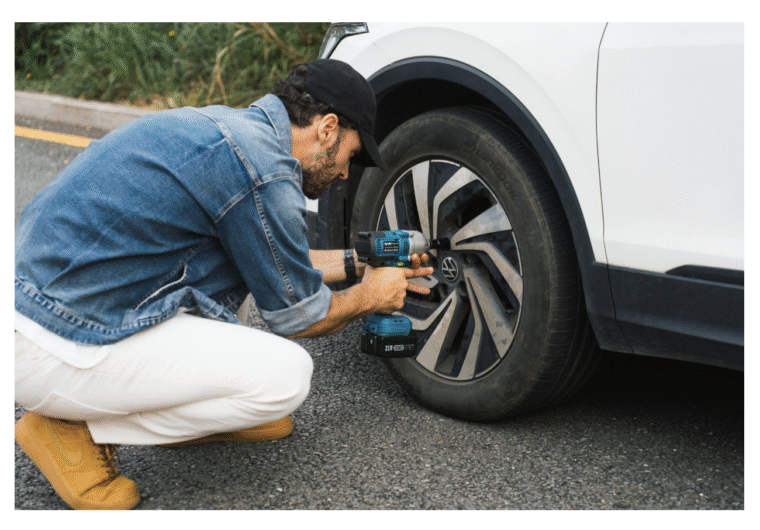
A cordless impact wrench is commonly associated with automotive work, but its high torque can also help with bolted structures, yard equipment, and heavy home projects. This guide covers seven practical uses, explains when another tool is better, and shows how to avoid damaged fasteners and overtightened connections.
When an Impact Wrench Makes Sense at Home
An impact wrench works best on nuts, bolts, anchors, and large fasteners with hex heads. Before reaching for one, consider the fastener type, required torque, and material you are working with.
Jobs That Need More Torque Than a Drill
A drill driver provides smooth rotation and good control, but it may struggle with large bolts, rusted nuts, and heavy lag screws. An impact wrench combines rotation with rapid impacts to produce much greater fastening or loosening force.
That power is useful for outdoor structures and equipment. It can be excessive for cabinet hardware, small screws, plastic parts, and other delicate assemblies.
Fasteners That Work Best With an Impact Wrench
Impact wrenches are designed mainly for nuts and bolts used with sockets. They also work with some hex head lag screws, structural fasteners, and concrete anchors when the fastener manufacturer permits powered installation.
Use only impact rated sockets and accessories. Standard chrome sockets can crack or shatter under repeated impacts. Six point sockets generally provide secure contact and reduce the chance of rounding a fastener.
When to Use a Different Tool
Choose an impact driver for deck screws, wood screws, and fasteners with a driver bit rather than a socket. Use a drill driver for precise holes, small hardware, and materials that are easy to damage.
Use a hand ratchet when space or control matters more than speed. A torque wrench is required whenever the manufacturer specifies an exact final torque.
Outdoor Assembly Jobs
Large outdoor structures often use a mixture of screws, lag fasteners, carriage bolts, and anchors. Check the plans before starting so each tool is matched to the correct connection.
1. Build or Repair a Deck
An impact wrench can speed up the installation or removal of through bolts, carriage bolts, and approved hex head structural fasteners. It is especially useful when replacing rusted hardware beneath an older deck.
Do not use it as the default tool for ordinary deck screws. An impact driver offers better control for those fasteners. Follow the deck plan and hardware manufacturer’s requirements for washers, pilot holes, spacing, and final tightening.
2. Assemble Pergolas and Gazebos
Pergolas and gazebos may contain large bolts connecting posts, beams, braces, and metal brackets. An impact wrench helps run these fasteners down quickly, particularly when several identical connections must be assembled.
Leave each joint slightly loose until the structure is square and aligned. Tighten in stages, then finish specified connections with a calibrated torque wrench or hand tool to avoid crushing the wood.
3. Install Fence Posts and Gates
Use an impact wrench for suitable anchor bolts, hinge bolts, carriage bolts, and large hex head lag fasteners. Its torque can be helpful when installing heavy gates or attaching brackets to correctly prepared posts.
Start every fastener by hand to avoid cross threading. Drill the required pilot hole in wood and use the anchor type specified for concrete or masonry. Excessive torque can split a post, deform a bracket, or strip an anchor.
Yard Equipment Jobs
Outdoor power equipment often has large fasteners exposed to dirt, moisture, vibration, and corrosion. An impact wrench can make disassembly faster, but equipment must be secured and disconnected first.
4. Remove Lawn Mower Blade Bolts
An impact wrench can loosen a stubborn mower blade bolt without requiring a long breaker bar. Before working, shut down the mower, wait for every moving part to stop, and disconnect the spark plug wire or remove the battery and safety key.
Wear heavy gloves and block the blade with a piece of wood according to the mower manual. Confirm the loosening direction because thread designs vary. Use the impact wrench for removal, then reinstall and tighten the bolt to the manufacturer’s stated torque with a torque wrench.
5. Maintain Tractors and Utility Equipment
A cordless impact wrench can help remove bolts from mower decks, wheels, hitches, guards, and compatible attachments. It is useful when weather exposure has made fasteners difficult to turn by hand.
Park on level ground, lower attachments, engage the parking brake, and follow the equipment’s lockout procedure. Support raised equipment with approved stands. Never rely on a hydraulic system or jack alone while working underneath it.
Home Improvement Jobs
High torque can also save time during storage and furniture projects. The impact wrench should be reserved for large bolted connections rather than small household hardware.
6. Install Heavy-Duty Shelving and Storage
Garage racks and heavy shelving may use concrete anchors, lag screws, or bolts attached to structural framing. An impact wrench can run approved hex head fasteners into properly prepared holes.
Locate studs and check for hidden wiring or pipes before drilling. Follow the shelving and anchor manufacturer’s instructions for hole diameter, embedment depth, and tightening. More torque cannot compensate for an unsuitable wall or incorrectly installed anchor.
7. Assemble Large Outdoor Furniture
Large picnic tables, benches, swing frames, and modular patio structures often use long bolts with washers and locknuts. An impact wrench can reduce assembly time when many similar fasteners are involved.
Begin every nut by hand and use a low setting until the parts are aligned. Stop before the hardware sinks into soft wood or distorts a metal frame. Use an impact driver or hand tool for smaller screws included with the same project.
How to Use an Impact Wrench for These Jobs
Good technique matters more than maximum torque. Inspect the fastener, choose the correct accessory, and approach tightening as a controlled process.
Choose the Correct Socket Size
Select an impact rated socket that fits the fastener without noticeable play. Match both the measurement system and drive size, since a nearby SAE size may seem to fit a metric bolt but can still round its corners.
Remove the battery before changing sockets. Push the socket fully onto the anvil and confirm that the retaining ring or pin holds it securely.
Start With a Lower Torque Setting
Start threads by hand, place the socket squarely on the fastener, and select the lowest practical setting. Pull the trigger briefly and check the joint before applying more power.
Long impact cycles can damage threads, crack materials, or make future removal difficult. Increase the setting only when the fastener continues moving smoothly and the application allows it.
Finish Critical Fasteners to the Required Torque
An impact wrench cannot reliably confirm exact final torque. Friction, battery charge, fastener condition, and impact time all change the result.
Use the impact wrench to bring a fastener close to seated, then finish it with a calibrated torque wrench. DeWalt’s impact wrench guidance specifically states that a separate torque measuring tool should be used when incorrect tightening could cause a joint to fail.
Choosing a Cordless Impact Wrench for Home Use
The most powerful model is not automatically the most useful. Choose a tool that fits your sockets, typical fasteners, available working space, and need for control.
Match Drive Size to Your Typical Fasteners
A 3/8 inch drive is compact and suitable for many small to medium-fasteners. A 1/2 inch drive offers a broader selection of larger sockets and is common for mower blades, equipment maintenance, anchors, and heavy structural hardware.
Avoid relying on multiple adapters for routine work. They add length and may reduce durability in high-torque applications.
Consider Torque Control and Speed Settings
Multiple settings make a high torque wrench more useful around the home. Lower modes help seat hardware with control, while higher modes can loosen corroded or tightly installed fasteners.
Look for a variable speed trigger, clear forward and reverse controls, and an automatic stop mode if available. These features can reduce dropped nuts and accidental overtightening, but they do not replace a torque wrench.
Choose a Battery Size That Fits the Job
A higher capacity battery usually provides longer runtime but increases tool weight. A compact battery may be easier for occasional assembly, while equipment maintenance and repeated large fasteners can justify a larger pack or spare battery.
For homeowners who regularly work on yard equipment and bolted outdoor structures, the SeeSii WH710 cordless impact wrench is a 1/2 inch model with a brushless motor. Its current listing specifies up to 800 N·m of tightening torque, 900 N·m of loosening torque, three forward settings, two reverse modes, and 4.0Ah battery kit options. That output is substantial, so use its lower settings for assembly and verify critical fasteners with a torque wrench.
Conclusions
A cordless impact wrench can handle much more than automotive repair. It can help with deck bolts, pergola hardware, gates, mower blades, tractors, storage systems, and large outdoor furniture. Its value comes from fast socket based work and strong loosening force. Use impact rated accessories, begin at a low setting, follow the equipment or fastener instructions, and complete every torque critical connection with a calibrated torque wrench.
