
White Oak Handrail Options for Elegant Staircases
A staircase requires more than just a well-designed step to look complete. Its handrail also adds to the space’s style, comfort, and safety. However, finding the right design can be difficult. You can be fond of a traditional style, while your staircase is modern. A handrail may also feel out of place or difficult to hold onto because of the wrong shape or size.
White oak handrails are available in a variety of styles to fit various staircases. Some have classic shapes, while others feature clean lines or curved designs. Each profile addresses a specific need. Knowing the differences can help you find one that fits your home and everyday use.
So, which white oak handrail options should you consider?
Let’s look at five popular designs.
1. 9100 White Oak Handrail for Comfortable Grip
If you need a handrail with a classic appearance and good grip, the white oak handrail 9100 is worth considering. It measures 2-1/4 inches wide and 2-3/8 inches high. These dimensions create a prominent handhold in both residential and office spaces.
The 9100 is a solid three-layer construction with no finger joints. This provides a uniform appearance and the natural beauty of white oak. Its shape also provides an equivalent gripping surface that complies with strict handrail code.
This profile works with 1-1/4-inch and 1-3/4-inch wood stair balusters. It also works well with iron and tubular steel balusters. This gives you more freedom when planning your staircase. You can blend parts made of wood and metal while maintaining a balanced appearance. A good choice is when you want a classic wooden handrail with a comfortable grip.
When selecting this profile, consider the type of baluster used in your staircase. Aligning the handrail with other compatible components also contributes to keeping the spacing constant and gives a unified look. You should also check the required handrail length and connection points before installation. This makes it easier to plan the complete railing arrangement.
2. 6010 White Oak Handrail for Classic Interiors
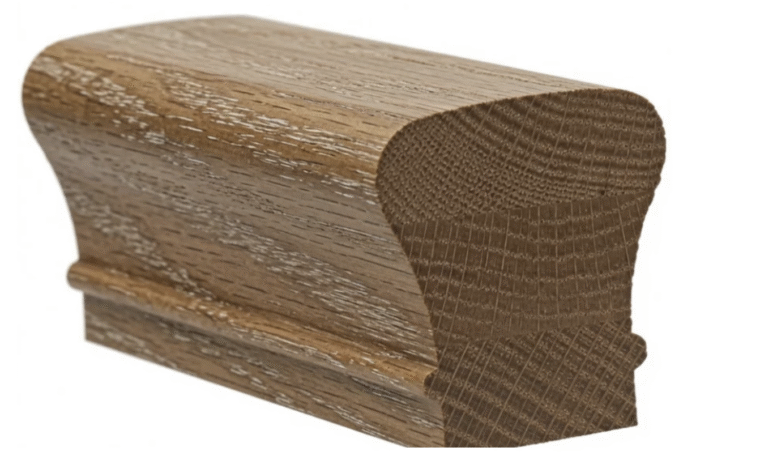
The 6010 White Oak Handrail features an early American design dating back to the late 1700s. It is 2-1/4 inches wide and 2-3/8 inches high. It has a classic shape that suits conventional and colonial houses, bringing warmth to contemporary interiors.
This handrail has a solid three-layer build with no finger joints. This helps keep its look even along its length. Its size also provides a comfortable grip that meets the standards used by most building code agencies.
Its historical design also makes it suitable for staircases with traditional architectural details, such as wooden newel posts and decorative balusters. You can maintain this classic appearance by coordinating the handrail with similar wood tones and complementary staircase finishes.
The 6010 can be easily matched with the other parts of the staircase. It can be paired with wooden balusters for a traditional look. It also goes well with other railing materials to give it a new look. Its common form fits most kinds of wooden stair components.
This style is worth considering if you need a plain handrail with a classic look. It adds a touch of old-world style without too much detail.
3. 6203 White Oak 2X6 Handrail for Modern Staircases
Modern staircases often use broad shapes and clean lines. The 6203 White Oak 2X6 Handrail suits this style because it is wide and flat. It measures 1-5/8 inches by 5-1/2 inches. This makes it a bolder appearance than most common handrail profiles.
Unlike round or curved handrails, this design has finger grips. These add more contact points for your hand. It also has a solid wood build with no finger joints or veneers. This helps maintain the wood appearance along the handrail.
The 6203 aligns with contemporary staircase designs. It can be attached to a wall too as a handrail. This makes it a good choice for spaces that do not need a separate baluster setup.
Its broad form suits minimalist interiors, straight lines, and contemporary wood finishes. This profile is ideal when you want your handrail to be one of the main elements of your staircase design.
Its wider dimensions also make it visually different from conventional handrails. Thus, one should take into account the available wall space and the general proportions of the staircase before choosing this profile. It must offer sufficient clearance to allow free movement and a balanced design with the adjacent walls, posts, and railing elements.
4. 6084 White Oak Handrail for Contemporary Spaces
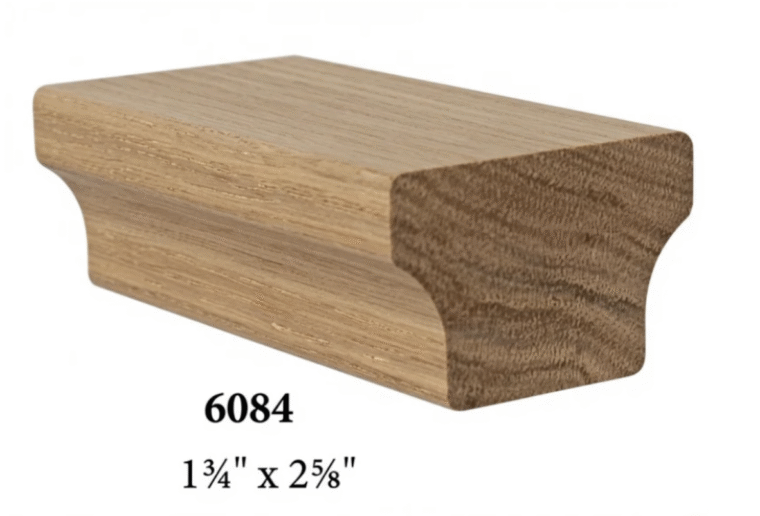
The 6084 White Oak Handrail is a flat, clean handrail suitable for modern spaces. It is between 2-5/8 and 1-3/4 inches wide and high. Its low profile gives it a flatter look than many classic handrail designs.
This handrail has a solid two-layer build with no finger joints. It also has a non-plowed design. This means it does not have a groove along the bottom for fitting balusters.
This profile can be used in handrails mounted to walls and used with stainless steel or contemporary wooden balusters. It also works with cable railing systems and vertical tubular balustrades. This makes it an option for most modern staircase designs.
Since this profile is non-plowed, its installation differs from handrails designed with a groove for balusters. You should consider the intended mounting method and the type of railing components used in your staircase. Checking these details beforehand helps prevent fitting issues and keeps the finished arrangement consistent with your design.
5. 9100B White Oak Bending Handrail for Curved Staircases
A straight handrail may not suit every staircase. Curved stairs need a handrail that can follow the shape of the steps. The 9100B White Oak Bending Handrail is made for this type of layout. It helps create a smooth, curved railing.
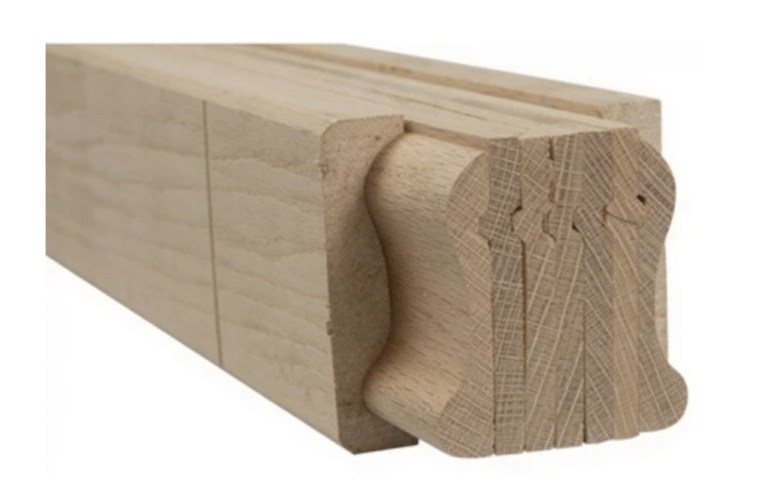
It measures 2-1/4 inches wide and 2-3/8 inches high, just like the standard 9100 profile. However, its build is different. It has seven pieces and comes with a bending mold. These parts help shape the handrail to fit a curved staircase.
Before installation, consider the direction and degree of the staircase curve. These factors influence how the handrail needs to follow the stair layout. Proper measurements and careful assembly are important because the finished railing should follow the curve without creating uneven transitions or uncomfortable gripping areas.
The 9100B is a useful choice for staircases with curved sections that need continuous wooden railing. It also keeps the same size as the standard 9100 design. This helps create a matching look when both profiles are used in the same space.
Conclusion
White oak handrails can suit many staircase styles. You can find classic designs for traditional homes, flat profiles for modern spaces, and bending options for curved stairs. The 9100 and 6010 suit classic designs, while the 6203 and 6084 offer a more modern look. The 9100B is made for curved layouts.
Before you choose, check the size, build, baluster fit, and installation needs. Also, consider how each profile will work with your existing staircase layout and interior finishes. These details can help you find a handrail that looks right, feels good to grip, and suits your staircase.


