
The Best Way to Pack a Kitchen So You Can Still Eat This Week
Packing a kitchen sounds easy until you realize how often you rely on it. You might need one spoon for your morning coffee, one bowl for lunch, and one pan for dinner, and somehow all of it ends up in a taped-up box. That’s the frustrating part of moving week. You’re trying to get organized, but you still need to eat, clean up, and keep your normal routine going. If you pack too early, you’ll waste money on takeout and spend your nights digging through boxes. If you wait too long, you’ll end up rushing and breaking things. The best way to pack a kitchen is to do it in stages, keeping only what you truly need for the final days.
1) Choose a Simple Meal Plan First
Before you touch a single plate, decide what you’ll eat for the next few days. This step makes everything else easier because it tells you what must stay out. Keep the meal plan basic and repeatable. Think sandwiches, pasta, eggs, tacos, or ready-to-heat options. Avoid recipes that need lots of tools or special ingredients. If you know you’ll cook three dinners at home this week, you can keep just a pot, a pan, and some utensils that support those meals. It also helps you stop buying random groceries that you won’t finish.
If you’re working with a local moving company, this quick meal plan also helps them understand what should stay unpacked until the very end. When you plan first, you pack with purpose instead of guessing, and the whole week feels smoother.
2) Pack What You Never Use Anyway
Most kitchens have a lot of items that rarely get touched. These are the first things you should pack because you won’t miss them during moving week. Start with serving dishes, extra mugs, large mixing bowls, and any cookware you don’t use for your simple meal plan. Then move on to bulky tools like cake pans, roasting racks, specialty slicers, and extra storage containers. If you haven’t used something in the last few months, it can probably go into a box today. Packing these items early also clears space so your counters stay usable. You’ll feel progress quickly without making daily life harder.
3) Set Up a Kitchen Survival Zone
You don’t need a full kitchen to get through the week, but you do need a small setup that works. Pick one cabinet or one corner of the counter and make it your survival zone. This is where your daily-use items live until the final day or two. Keep only the basics like one pan, one pot, a cutting board, a good knife, and a few plates and cups. Add dish soap, a sponge, paper towels, and a trash bag roll so you can still clean up easily. When everything stays in one spot, you won’t waste time hunting through half-packed boxes just to make a meal.
4) Pack in Groups That Make Sense
A common mistake is packing the kitchen by category, like boxing all utensils or all bowls at once. That sounds organized, but it usually creates problems. Instead, pack in groups based on how you actually live. Keep your coffee items together, including filters, mugs, and the scoop. Keep lunch items together, like food containers, a small cutting knife, and napkins. Group cookware with the tools you use with it, like a spatula and a wooden spoon. This method keeps your daily routine intact while the rest of the kitchen gets packed away. It also makes unpacking easier because you’ll open boxes that already fit into real-life setups.
5) Clean Out the Pantry as You Pack
The pantry can create the most last-minute stress because it hides a lot of half-used items. Go through it early so you don’t pack things you won’t want later. Start by using what’s already open, like snacks, cereal, rice, and sauces. Toss expired food and anything you know you won’t eat. This is also a good time to stop buying extras “just in case.” You don’t want to move heavy cans and bottles that you could finish before moving day. If you plan simple meals, the pantry will naturally shrink fast. When it’s time to pack, focus on sealed, stable items that won’t leak.
6) Wrap Breakables Like You Actually Care
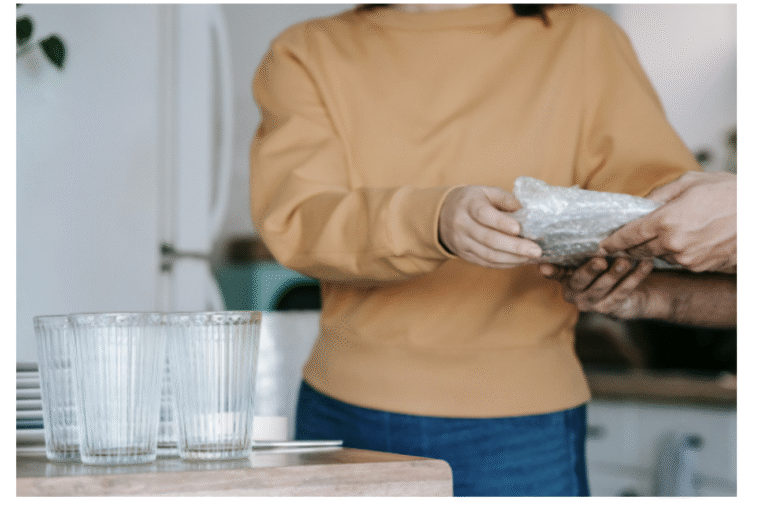
Your dishes and glassware can survive a move if you pack them with intention. Start with a sturdy box and reinforce the bottom with packing tape so it doesn’t split. Add a layer of paper or soft padding inside before placing anything in. Pack plates on their sides instead of stacking them flat, since they handle pressure better that way. Wrap each glass and mug on its own, and fill gaps so items can’t shift while the box is carried. Keep heavy items at the bottom and lighter ones on top. Don’t overpack a box just to save space. A smaller, safer box beats a heavy box that breaks.
7) Pack Appliances Without Losing Pieces
Small appliances often come with loose parts, and those parts tend to disappear during a move. Before you pack anything, unplug it, wipe it down, and make sure it’s fully cool and dry. Remove attachments like blender blades, food processor pieces, or mixer paddles and pack them with the right appliance. You can place the parts in a sealed bag and tape the bag to the appliance or put it in the same labeled box. Wrap cords neatly so they don’t tangle. Keep heavier items like air fryers or stand mixers in smaller boxes so you can lift them safely. Avoid packing anything with leftover crumbs or moisture, since that can cause odors later.
8) Finish the Things in the Fridge Before Moving Day
The easiest way to pack a fridge is to empty it on purpose. A few days before your move, start planning meals around what you already have. Use up meat, dairy, produce, sauces, and leftovers so you don’t waste food or create messy spills. Try not to buy more groceries unless you truly need basics. Condiments and drinks add weight, so use them up when possible. On the final day, pack only what must stay cold in a cooler with ice packs. Keep it small and realistic, since most moves take longer than expected. Defrost and dry the freezer ahead of time if it has heavy frost.
Packing your kitchen doesn’t have to turn into a week of takeout and frustration. The key is to pack in steps, not all at once. Keep a small set of daily essentials out, and pack everything else based on what you truly use. Protect breakables with smart padding, and don’t overload boxes just to save a few trips. Clean out drawers and pantry items early so you don’t waste time sorting later. Use up fridge food on purpose so you aren’t scrambling on moving day. When you stay organized, you protect your items and protect your time. Most importantly, you’ll still be able to eat normally while you prep for your move.
