
Violent video games and children’s psyche cause concern among parents and educators
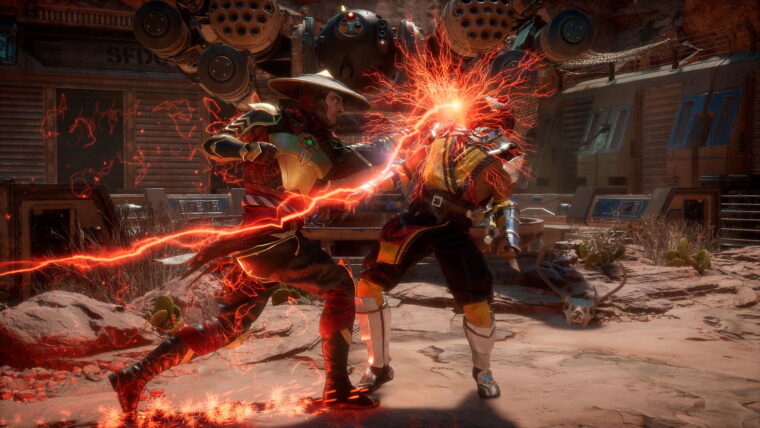
Many parents anxiously watch as children spend hours immersed in virtual worlds filled with battles and shootouts. Can these games be considered harmless entertainment, or do they really change a child’s character? The discussion about the dangers of violent video games has not subsided for decades and concerns everyone who cares about the future generation. Today, the question of the impact of such games on children’s psyche worries not only families, but also schools, lawmakers, and psychologists. Why does this topic cause so much debate, and should such games really be banned for children?
Video games involve millions of children and change their behavior
Today, about 90% of children in developed countries regularly play video games. Among them, a significant share is made up of projects with elements of violence, where players participate in fights, shooting, or destruction. Games are called violent if they encourage aggressive actions, show bloody scenes, or offer to resolve conflicts by force.
Supporters of banning such entertainment claim that they can:
- Cause an increase in aggression in the behavior of children and adolescents
- Reduce the level of empathy, that is, the ability to empathize with others
- Form erroneous behavior patterns, where strength and aggression become the norm
Some researchers and parents believe that video games with elements of violence are directly linked to aggressive actions in real life. However, there is also the opposite point of view: not all scientists see a direct link between virtual violence and real problems.
Society has been debating the impact of video games for almost half a century
The first serious debates around video games arose back in 1976, when the game Death Race appeared. It caused a storm of indignation because players were offered to run over virtual pedestrians. At that time, arcade machines with this game were even removed from arcades and burned in protest.
In response to public pressure, the first ESRB age rating system was created in 1994 so that parents could navigate the content of games. Since then, debates only intensified: with each new generation of consoles and the emergence of more realistic games, society once again discussed their impact on children. High-profile court cases, mass protests, and attempts at government regulation have become an integral part of the industry’s history.
It is worth mentioning separately the influence not only of ordinary computer games, but also those that can only be played by adults. We are not talking about erotic content and the like, because the gambling industry can have a strong influence, especially on children.
Despite the fact that the IGaming segment has been rapidly developing recently and crash games like JetX can literally be found everywhere, it is worth considering how to protect children from such influence. First of all, it is necessary to discuss this topic with the child so that they have an idea of what gambling is and why children are forbidden to play it. Also, it would also be useful to install parental control programs on the child’s PC that block access to such sites. As long as the child remains a child, the conscious choice must be made by the parents.
Tragedies in schools fuel fears and debates about video games
In the history of mass shootings in schools, mentions often emerge that the perpetrators were fond of violent video games. After the tragedy at Columbine in 1999 and Sandy Hook in 2012, the media and politicians actively discussed whether virtual aggression could become a catalyst for real violence. Many public figures and even US presidents publicly spoke about the need to limit children’s access to such games.
Some experts believe that video games can form a vulnerability to aggressive behavior, especially in unstable adolescents. However, skeptics point to many other factors: family dysfunction, mental disorders, access to weapons. They note that not every fan of virtual battles becomes a criminal, and mass hysteria sometimes hinders objective analysis.
What research shows about the impact of video games
Psychologists and sociologists have conducted hundreds of studies to find out whether violent games really make children more aggressive. Meta-analyses of data from the USA, Germany, Japan, and other countries show that children who often play such games do indeed more often show manifestations of aggression: quarrels, fights, outbursts of anger.
Aggression is a tendency toward hostile behavior, and empathy is the ability to understand the feelings of others. Studies note that in avid gamers, the level of empathy may decrease, and they become less inclined to help others. However, no direct link between games and serious crimes has been proven: most scientists emphasize that the impact of video games on the psyche depends on many factors, including upbringing and personal characteristics.
Among the limitations of studies, the following are often mentioned:
- The difficulty of separating the influence of games from other environmental factors
- The short-term nature of experiments
- Differences in cultural and family attitudes
The ban on video games causes heated debates and does not always work
Many parents and experts oppose a complete ban on violent video games. They note that children can easily gain access to prohibited content via the internet or friends. Practice shows that mechanical bans are often ineffective, and attempts to completely shield teenagers from modern technology cause protest and distrust.
Some specialists believe that it is much more important to develop critical thinking and self-control skills in children, as well as to establish family dialogue about what is really acceptable in life. Cultural differences also play a role: for example, in some countries, the attitude toward virtual violence is less alarming, and upbringing is based on other principles.
Global experience and how different countries regulate access to violent games
Many countries have rating systems such as ESRB in the USA or PEGI in Europe. They indicate age restrictions and warn about the presence of violence in the game. In Germany, Australia, and China, there are strict laws prohibiting the sale of especially violent games to children. In other countries, the main responsibility falls on parents.
The most effective are considered to be measures that combine government control, parental education, and technological parental control tools. However, no universal solution has been found yet: everywhere they face the problem of circumventing bans and differences in family values.
Discussion of the topic of video games requires a balance of interests and constant dialogue
The issue of banning violent video games for children remains open and requires careful discussion. It is important that parents, educators, scientists, and lawmakers seek a balance between protecting children and freedom of choice. Education and the development of a critical attitude toward media are becoming key tools of prevention of negative consequences.
Only a scientific approach, honest dialogue, and willingness to compromise will allow society to make an informed choice and protect children from real threats, without going to extremes.
