
The Rise of Lightweight Luxury Bedding for Modern Sleepers
Modern sleepers are increasingly prioritizing sleep quality over quantity, driving demand for premium bedding that combines exceptional comfort with practical functionality.
The global luxury bedding market reflects this shift, as consumers seek materials that deliver both performance and indulgence without the heaviness of traditional comforters.
This evolution has positioned lightweight luxury bedding as the cornerstone of contemporary sleep wellness. At the forefront of this movement is the silk down comforter—a fusion of natural silk casing and premium down fill that delivers cloud-like warmth without bulk.
The Science Behind Lightweight Warmth
Thermal regulation is the defining advantage of lightweight luxury bedding. Research published in peer-reviewed studies confirms that sleepwear and bedding fiber types directly affect sleep quality by influencing skin temperature and thermal comfort.
“Silk is a very breathable fabric due to the air pockets it contains, yet it’s also a great insulator, meaning you don’t have to worry about overheating.”
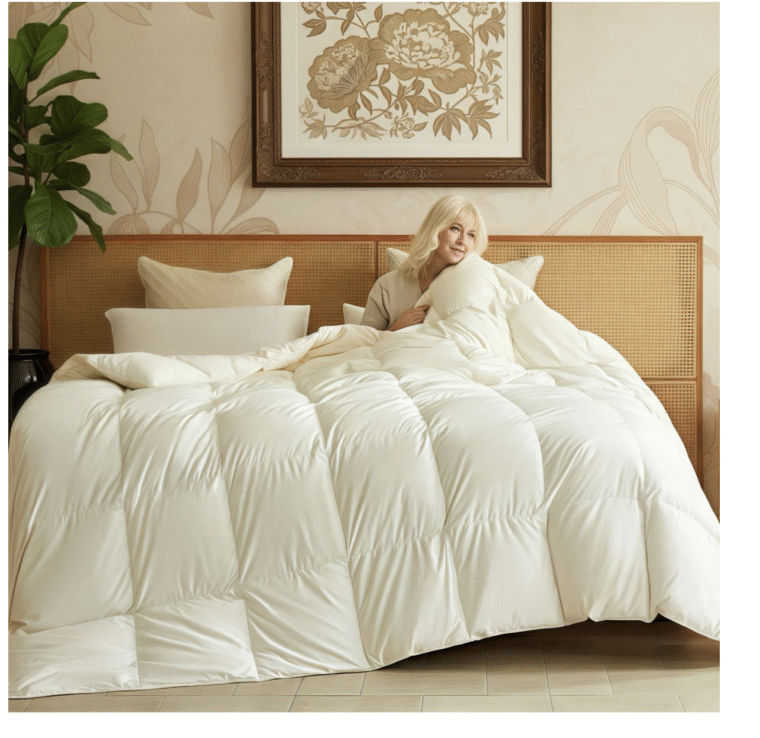
Warmy & Tummy‘s Deluxe Silk Goose Down Comforter exemplifies this balance. Its mulberry silk shell regulates moisture while the premium goose down traps air in microscopic clusters, creating insulation that adapts to body temperature fluctuations throughout the night. This dual-action system eliminates the need for heavy blankets that cause night sweats or middle-of-the-night temperature adjustments.
Studies demonstrate that silk bedding can reduce the number of times sleepers wake due to overheating by efficiently dissipating body heat.
For modern sleepers who value uninterrupted rest cycles, this functionality translates to measurably better sleep architecture.
Why Modern Sleepers Choose Silk Down Comforters
Today’s consumers demand bedding that aligns with their lifestyle—portable, low-maintenance, and hypoallergenic.
Traditional heavy comforters present practical challenges: they’re difficult to launder, trap allergens, and create sleeping environments that fluctuate between too hot and too cold. The silk down comforter addresses these pain points systematically.
Silk’s natural protein structure resists mold spores and dust mites, which are common sleep disruptors for allergy sufferers. This inherent resistance means fewer allergen-related awakenings and cleaner sleep surfaces with minimal intervention.
The lightweight construction also supports practical lifestyle needs. Modern sleepers travel more frequently, work hybrid schedules, and move residences more often than previous generations. Silk down comforter from Warmy & Tummy weighs significantly less than synthetic alternatives while maintaining superior warmth-to-weight ratios—making it easier to store, transport, and care for without sacrificing luxury.
The Shift Toward Sustainable Luxury
Sustainability and craftsmanship are no longer optional considerations—they’re purchasing prerequisites. The 2025 bedding market shows consumers actively seeking products that merge eco-conscious materials with artisan quality.
Silk production requires fewer chemical inputs than synthetic fabric manufacturing, and responsibly sourced down utilizes byproducts from the food industry rather than contributing to waste streams. Warmy & Tummy’s commitment to ethically sourced materials reflects this industry-wide shift toward transparency and environmental stewardship.
The longevity of silk down bedding also contributes to its sustainability profile. While mass-market comforters deteriorate within 2-3 years, premium silk down comforters maintain their loft and insulating properties for decades with proper care. This durability transforms the purchase from a recurring expense into a long-term investment in sleep quality.
What to Look for in a Premium Silk Down Comforter
Thread count, fill power, and construction method determine whether a comforter delivers on its luxury promise.
Premium silk shells should feature thread counts above 300 with tight weaves that prevent down from escaping while maintaining breathability. Warmy & Tummy Deluxe Silk Comforter uses baffle-box construction—a technique that creates individual compartments to prevent down migration and maintain even warmth distribution across the entire surface.
Fill power measures the loft and insulating capacity of down. Higher fill power (600+) indicates larger down clusters that trap more air with less weight. This metric directly correlates with warmth efficiency—the amount of insulation provided per ounce of material.
Stitching quality also matters. Double-stitched seams and reinforced corners extend comforter lifespan and prevent structural failure at stress points. These details separate true luxury pieces from budget alternatives that prioritize initial aesthetics over long-term performance.
FAQ
What makes silk down comforters better for sleep than synthetic alternatives?
Silk down comforters regulate temperature more effectively than synthetic materials, reducing night sweats and sleep disruptions. Research shows silk bedding enhances sleep quality by maintaining optimal skin temperature throughout the night.
The natural breathability of silk combined with down’s insulating properties creates a sleep environment that adapts to your body rather than working against it.
How do I care for a silk down comforter?
Most premium silk down comforters, including Warmy & Tummy’s options, require professional dry cleaning to maintain silk integrity and down loft. Between cleanings, air the comforter outdoors in shade to refresh fibers and allow moisture to evaporate. Use a duvet cover to protect the silk shell and extend cleaning intervals to once or twice annually for typical use.
Are lightweight comforters warm enough for winter?
High-quality silk down comforters provide exceptional warmth despite their light weight. The fill power rating determines winter suitability—look for ratings of 600+ for three-season use and 700+ for cold climates. The baffle-box construction in Warmy & Tummy comforters maximizes down loft, creating superior insulation without adding bulk.
