
The Smart Way to Decide What Kind of Rehab You Need
Addiction treatment is not one-size-fits-all. Some people benefit from weekly counseling sessions while continuing to work and care for their families. Others need a highly structured environment with around-the-clock support. Determining the right level of care is one of the most important decisions a person can make when seeking help, because the effectiveness of treatment often depends on matching services to individual needs rather than choosing the most intensive or least intensive option available.
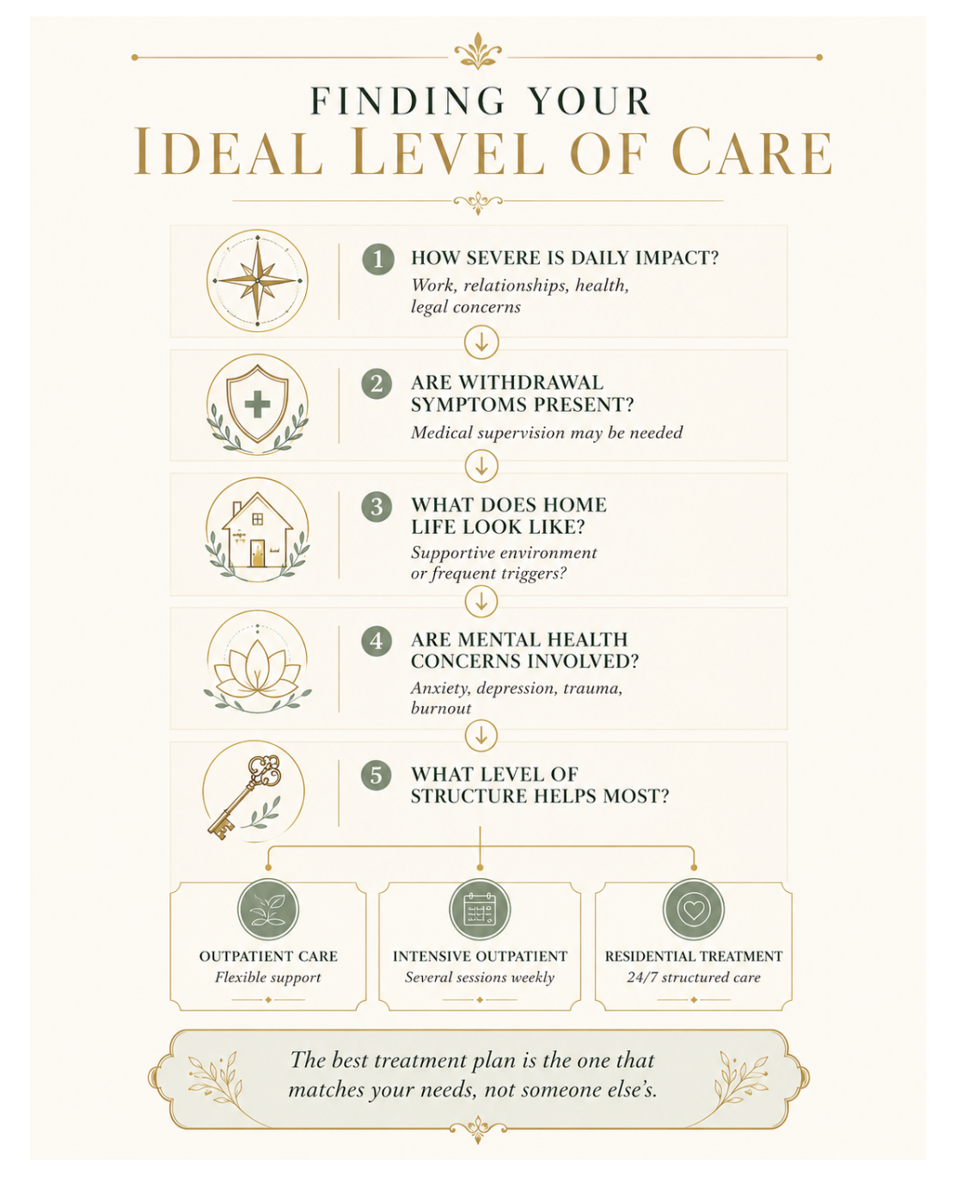
Consider the Severity of Your Substance Use
One of the first questions to ask is how much addiction is affecting daily life. Someone who has experienced repeated relapses, withdrawal symptoms, legal issues, relationship conflicts, or major disruptions at work may require a higher level of care than someone who is seeking help early in the process.
Treatment professionals often evaluate how frequently substances are used, whether withdrawal symptoms are present, and how difficult it has been to stop without support. The answers help determine whether outpatient services are appropriate or whether a more structured setting is necessary.
Severity is not about judgment. It is about understanding how much support is needed to build a strong foundation for recovery and prevent future setbacks.
Look at Your Environment and Daily Triggers
The environment a person returns to each day can have a significant impact on recovery outcomes. If substances are readily available at home, if relationships are highly stressful, or if daily routines revolve around people who still use substances, additional structure may be beneficial.
In some situations, geography itself becomes part of the treatment decision. For example, a New York or California luxury rehab may be a better fit than a local program when someone needs distance from familiar triggers, unhealthy relationships, or overwhelming life stressors. A change in environment can create space to focus entirely on treatment without the distractions and pressures of everyday life.
That does not mean everyone should travel for care. Many people recover successfully close to home. The key is determining whether the current environment supports recovery or makes it harder to maintain.
Evaluate Mental Health Needs
Addiction and mental health concerns frequently overlap. Anxiety, depression, trauma, eating disorders, and other conditions can influence substance use patterns and recovery challenges. When mental health symptoms are significant, treatment should address both issues at the same time.
A person who struggles with panic attacks, severe depression, self-destructive behaviors, or unresolved trauma may benefit from programs that offer psychiatric services, trauma-informed therapy, and integrated treatment planning. Addressing only the substance use issue often leaves important underlying factors unresolved. Comprehensive assessments can help identify mental health concerns that may not be immediately obvious. The more complete the clinical picture, the easier it becomes to choose the appropriate level of care.
Understand the Differences Between Levels of Treatment
Many people assume treatment options fall into only two categories, but there is actually a wide range of care available. Detox programs focus on managing withdrawal safely. Residential treatment provides full-time support and structured daily schedules. Partial hospitalization programs offer intensive treatment during the day while allowing clients to return home or to sober housing at night. Intensive outpatient programs provide multiple therapy sessions each week, while traditional outpatient care offers greater flexibility.
A common question involves inpatient versus outpatient rehab. Inpatient treatment generally works best for individuals who need constant structure, medical oversight, or separation from difficult environments. Outpatient treatment can be highly effective for those with stable living situations, strong support systems, and the ability to remain engaged in daily responsibilities while attending treatment.
Be Honest About Past Attempts to Quit
Previous treatment experiences can provide valuable information. If someone has tried to stop multiple times without success, that history may suggest a need for additional support or a different treatment approach.
Relapse does not mean treatment failed. It often indicates that the level of care was not sufficient, certain underlying issues were not addressed, or aftercare support was lacking. Looking at what worked and what did not work in previous recovery efforts can guide future decisions.
Treatment planning becomes more effective when people are willing to examine past experiences honestly instead of viewing them as personal failures.
Think Beyond the First 30 Days
Choosing a treatment program should involve more than deciding where to begin. Long-term recovery often depends on what happens after the initial phase of treatment ends. Effective programs typically include aftercare planning, relapse prevention strategies, ongoing therapy recommendations, support groups, family involvement, and recovery-focused lifestyle changes. Building a plan for continued support can help maintain progress and reduce the likelihood of returning to old patterns.
The right level of addiction treatment depends on individual circumstances, not assumptions or labels. By evaluating substance use severity, mental health needs, environmental factors, and past recovery experiences, individuals can choose a level of care that provides the support necessary for meaningful and lasting change.
