
Questions Worth Asking Before You Sign With an Injury Firm
A contingency fee of 40 percent turns a $100,000 settlement into $60,000 before a single case cost comes out. For a single income household in Indiana County, that gap decides whether the mortgage gets paid or the family slides behind. Most first time clients never ask about it, which is why choosing the best personal injury attorney indiana pa offers should start with the fee sheet and the firm’s record, not the billboard. This is a buyer’s decision, and the money you keep depends on the questions you ask before you sign, not the ones you think of after.
What a Contingency Fee Really Leaves You
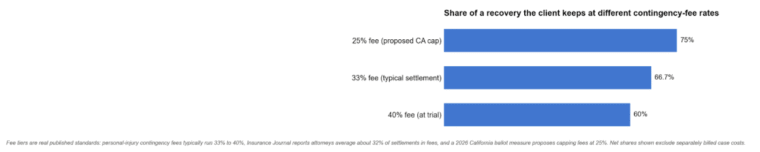
Here is how the math actually works. A contingency fee means the firm takes a set percentage of your recovery and collects nothing if you lose. Typical rates run about 33 percent on a settlement and closer to 40 percent once a case goes to trial. On a $90,000 settlement, a one third fee is $30,000, which leaves you $60,000 before costs. Then the case costs come out, and they add up fast: filing fees, medical records, expert witnesses, deposition transcripts. That is where the money quietly leaks out, because a firm that subtracts its costs after calculating the fee instead of before can cost you thousands more on the exact same number.
Fee limits are even becoming a ballot question now. Back in May 2026, an Uber funded measure in California proposed capping plaintiff attorney fees at 25 percent and guaranteeing accident victims keep at least 75 percent, according to reporting from The San Francisco Standard, with Uber standing as the sole donor at more than $77.5 million. Pennsylvania has no such cap. So the percentage you agree to is the percentage you actually pay, and the chart below shows how much of a sample recovery you keep as that rate climbs.
Percentages are only half the story, because the size of the award itself can shrink. Comparative fault rules let a jury cut your damages by your own share of the blame, and in Pennsylvania a plaintiff found more than 50 percent responsible can be barred from recovering at all. In one recent case a jury put a slip and fall victim’s total damages at $750,000, then reduced the actual award to about $266,000 after finding her 65 percent at fault, as Yahoo News reported. Read that number again. Nearly half a million dollars vanished on a fault finding, not on the fee. A firm that spots your fault exposure early, gathers the photos and witness statements while they are fresh, and builds the case against that risk can change what you walk away with.
Questions That Separate Strong Firms From Weak
The right questions surface fast whether a firm will treat your case like a file number. Ask them on the first call, before you sign a thing. A firm that gets cagey about fees, or hands you to a paralegal you never met, is telling you something real. The case we see most often is a family that hired on the lowest quoted rate and then lost a third of the settlement to costs nobody explained up front.
- What is your fee if the case settles versus if it goes to trial? A straight answer names both numbers, usually around 33 percent and 40 percent.
- Are case costs deducted before or after your fee is calculated? Before is better for you, and a good firm says so plainly.
- Who handles my file day to day, you or a paralegal? A strong answer names the attorney and gives you a direct line.
- How many cases like mine have you taken to a verdict, not just settled? Look for a real count and a recent example.
Listen closely to how the answers come back. A strong firm gives you numbers without stalling and explains the reasoning behind them. A weak one talks around the fee, promises a big result on a first phone call, or cannot tell you who will actually sign your court filings. Trust the specifics over the confidence. The attorney who says a similar case settled last year for a stated figure, and names the county it was filed in, is showing you the work rather than the pitch.
Vetting does not stop at the phone call. You can look up any Pennsylvania lawyer for free through the Disciplinary Board of the Supreme Court of Pennsylvania’s attorney search and see whether they have ever faced discipline. Run that check before the meeting (it takes about two minutes, and nobody will ever know you did it). Cross reference it against the firm’s own reported settlements and verdicts, and you have a picture no advertisement can fake. A clean record plus straight answers on fees tells you far more than any five star ad ever will.
Choose on Track Record Not Price
Experience is not a luxury on an injury claim. It is what keeps the claim alive. In Pennsylvania an injured worker must report a work injury to the employer within 21 days for benefits to be paid back to the injury date, and no compensation is allowed at all if the injury goes unreported for 120 days, under state Department of Labor and Industry rules. A firm that has run those clocks hundreds of times does not miss them. That kind of track record is worth more than a slightly lower rate, and it is why the best personal injury attorney indiana pa families can hire is the one with verdicts and settlements on the board, not the cheapest name in the directory. Woomer and Talarico works on a No Recovery, No Fee basis, so the fee question and the experience question line up: you pay nothing unless they win, and the years behind the firm are what make winning likely. Ask about fees, ask about costs, check the record, then sign with the firm that answered all three without flinching.
