
What Happens When Roof Plumbing Goes Wrong and How to Catch It Early
Most home maintenance problems announce themselves. A tap that drips, a door that sticks, a crack that appears in the plaster. Roof plumbing problems are different. They start in a place most homeowners rarely look, they develop slowly in spaces that aren’t visible, and they arrive at a point of obvious failure that typically costs considerably more to fix than the original issue would have.
Water is patient in a way that property owners generally aren’t. A small gap in flashing, a gutter that’s slightly misaligned, a downpipe joint that isn’t quite sealed, none of these feel urgent until they’ve been allowing water into places it shouldn’t be for long enough that the damage is substantial. Understanding what roof plumbing covers, what the early warning signs look like, and what the consequences of inaction are is the knowledge that separates homeowners who catch problems cheaply from those who fix them expensively.
What Roof Plumbing Actually Covers
Roof plumbing is more comprehensive than most homeowners realise, and understanding the scope of the system helps explain why a problem in one component can affect the performance of everything connected to it.
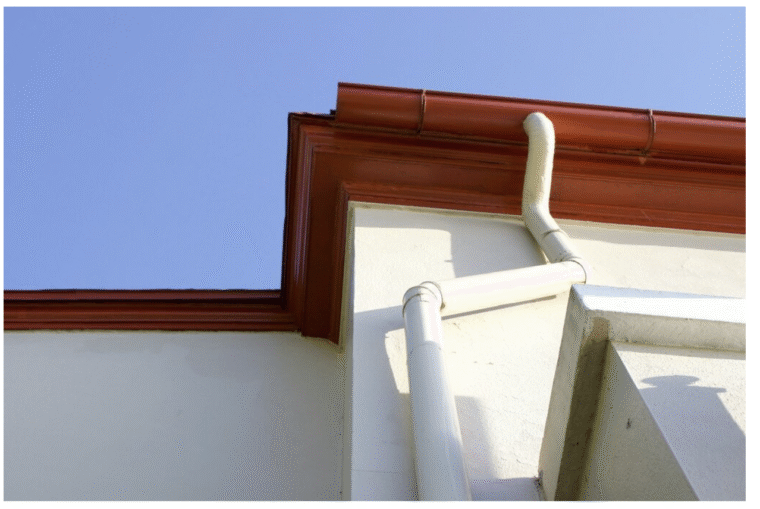
Gutters are the most visible element, designed to collect rainwater running off the roof surface and direct it toward downpipes for controlled removal from the property. Downpipes carry that water from the gutters to the ground level drainage system, and their sizing, positioning, and condition directly affect how efficiently the gutters can do their job. Flashings seal the vulnerable joints, valleys, and edges of a roof where different surfaces meet, and are typically the first point of failure when water begins finding its way into a building. Roof drainage systems manage the flow of water across the roof surface itself and ensure it reaches the gutters efficiently rather than pooling or running in unintended directions.
These components work together as a system, which means a blockage in a downpipe affects the gutters above it, a failed flashing creates water entry that appears to be a gutter problem, and poor drainage design puts pressure on every other component in the chain. Diagnosing a roof plumbing problem properly requires understanding how the whole system interacts, not just addressing the most obvious symptom.
The Warning Signs Most Homeowners Miss
The early indicators of roof plumbing problems are almost always visible to someone who knows what to look for, but they’re consistently overlooked by homeowners who aren’t expecting them.
Overflowing gutters during rainfall are the most common visible sign, and they’re usually interpreted as a blockage problem rather than what they often are: a gutter that’s lost its fall, a downpipe that can’t handle the volume, or a drainage system that’s been compromised. Clearing the blockage addresses the symptom without addressing the cause, and the problem returns.
Water staining on exterior walls, particularly below gutter lines or around window frames, indicates water is escaping from the roof plumbing system in a location it shouldn’t be. The staining itself is the visible evidence of a problem that’s been occurring long enough for the discolouration to develop, which means the underlying issue has been present for some time before it’s noticed.
Rust or corrosion on gutter sections, joints, and downpipe connections indicates that water has been sitting in those areas rather than draining efficiently. This is an early indicator of alignment or fall problems that will worsen if not addressed, and of joints that are likely to fail before long.
Peeling paint or bubbling plaster on interior ceilings or walls is a later-stage indicator that water has been entering the building, but it’s worth including because many homeowners assume internal water damage must have an internal cause. Roof plumbing Melbourne specialists frequently identify the source of internal water damage as a failed flashing or misaligned gutter that’s been directing water into the wall cavity rather than away from the building.
What Happens When Problems Are Left Too Long
The trajectory of an ignored roof plumbing problem is almost always the same, and the cost at each stage increases significantly from the one before.
A blocked or misaligned gutter left unaddressed allows water to overflow consistently during rainfall. That overflow saturates the fascia board behind the gutter, which begins to rot. The rotting fascia can no longer support the gutter correctly, which worsens the alignment problem and accelerates the overflow. Water that finds its way into the soffit space begins to affect the roof structure behind it, and what started as a cleaning or realignment job becomes a fascia replacement, soffit repair, and potential roof structure remediation.
Failed flashings follow a similar pattern. A small gap that allows water entry during heavy rain becomes a larger gap as the flashing material moves with the thermal expansion and contraction of the roof. The water entry that was occasional becomes regular. The timber framing it contacts absorbs moisture, begins to degrade, and eventually develops rot or mould that requires structural intervention rather than simply resealing the flashing.
The common thread is that roof plumbing problems don’t stabilise. They progress, and they progress faster once water has found a consistent path into the building fabric. The cost of addressing a problem at the early warning sign stage is almost always a fraction of the cost of addressing it once water damage is established.
Why Professional Inspection Makes the Difference
The reason professional roof plumbing inspection is worth its cost is that most of what matters in a roof plumbing system isn’t visible from the ground and isn’t accessible without the right equipment and the knowledge to interpret what’s found.
A licensed roof plumber assessing a property looks at gutter fall and alignment, the condition of all flashing points, the integrity of downpipe connections and their adequacy for the roof area they’re draining, the condition of valley gutters and any penetrations through the roof surface, and the overall drainage pattern across the roof. This assessment identifies problems that are developing as well as problems that have already occurred, which means the inspection informs a maintenance plan rather than simply a repair list.
For Melbourne homeowners who want an assessment of their property’s roof plumbing condition, engaging a roof plumber in Melbourne who attends in person, provides a clear report of findings, and is licensed to carry out any work identified is the process that produces reliable outcomes. An inspection that identifies a fascia beginning to rot or a flashing that needs resealing is an inspection that prevents the larger costs those issues become if they’re left to develop.
Why Acting Early Is Always the Right Call
The roof plumbing system is the part of a home that most consistently rewards attention and most reliably punishes neglect. It operates in the background, managing one of the most significant threats to a building’s structural integrity, and it does that job well when it’s maintained and poorly when it isn’t.
The early warning signs that a system is beginning to fail are available to any homeowner willing to look for them, and the professional assessment that confirms or identifies issues before they become serious is a cost that almost always returns its investment many times over. Water damage that’s caught before it’s established is a repair. Water damage that’s been developing for years is a project, and the difference in cost, disruption, and stress between the two is the most compelling argument for taking roof plumbing maintenance seriously before it becomes impossible to ignore.
