
The Hidden Psychology of Scent Marketing: What Every Business Owner Should Know
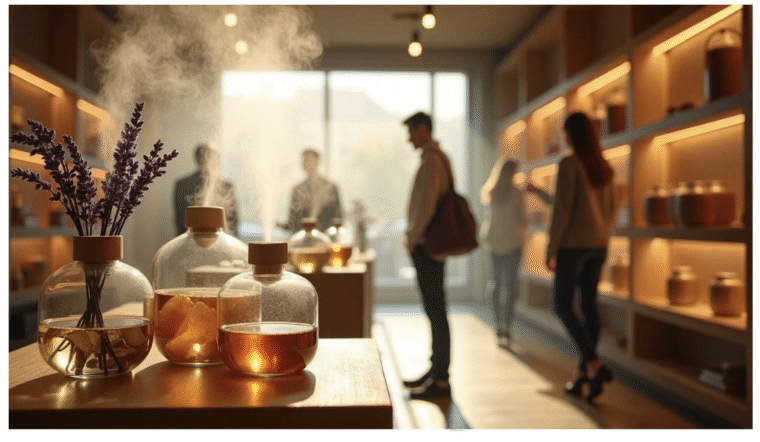
Did you know that customers spend up to 44% more time browsing when a business uses the right ambient scent? Scent marketing remains one of the most underutilized yet powerful tools in a business owner’s arsenal. While visual and auditory marketing dominate business strategies, our sense of smell actually creates stronger emotional connections and memory associations.
Surprisingly, humans can remember more than 10,000 different scents with remarkable accuracy, often recalling them decades later. This direct connection between scent and memory happens because smell bypasses the logical centers of our brain, triggering immediate emotional responses. In fact, studies show that scent-based marketing can increase sales by up to 11% in certain retail environments.
Despite its effectiveness, many businesses overlook this sensory dimension completely. Throughout this article, we’ll explore the fascinating psychology behind scent marketing, how it influences customer behavior, and the practical steps to implement an effective scent strategy for your business. You’ll discover exactly how the right fragrance can transform your customer experience and strengthen your brand identity in ways traditional marketing simply cannot match.
The Science Behind Scent and Emotion
The unique architecture of our olfactory system creates a powerful gateway directly to our emotions and memories. Unlike other sensory inputs that undergo extensive processing before reaching consciousness, scent signals travel an express route to our brain’s emotional core. This neurological shortcut explains why scent marketing works so effectively in business environments.
How scent bypasses the brain’s filters
The olfactory system follows a distinctive neural pathway that sets it apart from all other senses. When scent molecules enter our nose, they bind to specialized receptors that transmit signals to the olfactory bulb. From there, these signals take a direct route to the brain’s emotional and memory centers without passing through the thalamus. This thalamic relay normally filters and processes sensory information before it reaches higher brain regions.
Essentially, smell is the only sense that circumvents the brain’s usual filtering system. This direct neural pathway explains why a business’s carefully chosen fragrance can influence customers before they’ve even consciously registered the scent. The olfactory bulb sends information straight to the limbic system, allowing scents to trigger immediate emotional and physiological responses.
The role of the limbic system in memory and emotion
At the heart of scent’s emotional power lies the limbic system – specifically the amygdala and hippocampus. The amygdala processes emotions such as fear, pleasure, and nostalgia, furthermore handling emotional responses to stimuli. Research shows that the amygdala plays a key role in some affective responses, including associative learning where neurons encode odor cues connected to positive or negative experiences.
The hippocampus, meanwhile, manages memory formation and retrieval. This region is fundamental for episodic memory – the autobiographical memories that include time, place, and associated emotions. Studies demonstrate that odor information is stored directly in these emotional brain centers.
This anatomical arrangement creates a powerful connection between scents and emotional responses. Subsequently, when customers encounter a business’s signature scent, it can evoke specific feelings – calm, excitement, nostalgia, or comfort – depending on the fragrance profile selected.
Why smell triggers stronger memories than sight or sound
Our brain processes olfactory information differently than visual or auditory stimuli, resulting in more emotionally charged memories. Neuroscientists have discovered that brain activity differs significantly when odor-linked memories are triggered versus picture-linked memories. The areas responsible for memory and emotion show heightened activity with olfactory triggers compared to visual stimuli.
Additionally, research involving 170 participants revealed that olfactory cues were considerably more effective at triggering clear and emotionally related memories than visual cues. The memories evoked by scents tend to be more emotional, with individuals more likely to remember the original place and time with greater clarity.
This phenomenon occurs primarily because smell and emotion are stored as a single memory unit. Childhood represents a critical period for forming these connections – the sense of smell is fully developed in the womb and remains the most developed sense until around age 10. Consequently, many of our strongest scent associations form during this period, creating the foundation for scent preferences that last a lifetime.
For business owners, understanding these neurological connections provides a powerful tool. By strategically implementing scent marketing, you can create emotional bridges to your brand that visual or audio marketing simply cannot achieve.
How Scent Influences Customer Behavior
Beyond theory, scent marketing delivers measurable business results through specific behavioral changes in consumers. Research consistently shows that strategic use of fragrance influences not just how customers feel, but how they act, spend, and perceive value.
Increased dwell time in scented environments
The right scent can make time seem to stand still for shoppers. A notable study at Galeries Lafayette in Paris revealed that customers significantly underestimated how long they spent in scented stores—believing they had browsed for only 25 minutes when they had actually spent over an hour. This perception distortion works in retailers’ favor, as increased dwell time correlates directly with higher sales.
Samsung discovered that shoppers in scented environments visited three times more product categories and underestimated their shopping time by 26%. Similarly, casino research demonstrated a remarkable 45% revenue increase for slot machines in scented areas, along with a 40% increase in dwell time versus unscented sections.
The type of scent matters considerably. Simple fragrances like citrus and pine are particularly effective at extending shopping time because they require minimal mental processing. This allows customers’ brains to focus on product evaluation rather than scent interpretation. Lavender has proven especially powerful, slowing customers’ perception of time and encouraging longer store visits.
Overall, businesses using ambient scent report that shoppers stay an average of at least 15 minutes longer —precious additional time for browsing and discovering products they might otherwise miss.
Impact on perceived product value
Perhaps most striking for business owners is how scent affects perceived value. Nike’s research found that scent marketing positively impacted the desirability of shoes in 84% of subjects. Moreover, these customers were willing to pay 10-20% more for the same products when presented in a scented environment.
This premium perception extends across industries. Research indicates that consumers will typically spend 10-15% more for identical products in scented spaces compared to unscented ones. Product ratings themselves improve substantially, with items in scented areas rated up to 25% higher than those in unscented spaces.
Luxury businesses particularly benefit from this effect. High-end stores employ bespoke fragrances specifically formulated to create an atmosphere of exclusivity and sophistication. Car dealerships enhance perceived value with leather and woody notes, while hotels craft signature scents with sandalwood and cedar to convey warmth and exclusivity.
Emotional responses that drive purchases
The fundamental power of scent marketing lies in its ability to trigger emotional responses that drive buying decisions. Research indicates that pleasant scents can elevate a customer’s mood by as much as 40%, creating a psychological state more conducive to purchasing.
Remarkably, 75% of all daily emotions are generated by the smells we encounter, giving retailers who master scent marketing direct access to customers’ emotional states. The Washington State University study found that shoppers in simple scented environments spent an average of 20% more than those in unscented areas.
Different scents trigger predictable responses: lavender and chamomile encourage relaxation, citrus enhances alertness, while vanilla and cinnamon stimulate appetite. Retailers can strategically select fragrances aligned with desired shopping behaviors—relaxing scents for contemplative purchases or invigorating ones for impulse buys.
The Journal of Consumer Research discovered that consumers recall brands and make purchases more frequently when products feature distinct scents. This memory connection creates powerful brand associations that extend well beyond the shopping experience itself.
Building Brand Identity Through Scent
Beyond influencing immediate behavior, scent has become a cornerstone of long-term brand recognition for forward-thinking businesses. Companies that harness the power of signature fragrances create deeper emotional connections with customers, fostering loyalty that visual branding alone cannot achieve.
Creating a signature scent for your business
Developing a custom fragrance involves collaboration with scent professionals who understand the science of olfactory branding. These experts work closely with businesses to craft unique aromas that become recognizable parts of a brand’s identity. The resulting signature scent acts as a sensory logo—one whiff, and your brand immediately comes to mind.
Once created, this distinctive fragrance becomes part of a brand’s intellectual property, often implemented into corporate branding guidelines and protected with a certificate of exclusivity. Indeed, custom fragrance products like candles and room sprays have become major revenue opportunities, with some retail clients earning $363,000 in profit from scented candles alone.
Aligning fragrance with brand values
Effective scent branding begins with strategy, not personal preference. The fragrance must reflect what the brand represents—its values, story, and the emotional impact it aims to create. For instance, a luxury hotel might select sandalwood and jasmine notes to convey elegance and calm, whereas a beach resort might choose coconut and sea salt for a refreshing ambiance.
This strategic alignment requires understanding the fundamental psychology behind scent perception. Above all, the fragrance should express brand identity rather than a creative director’s personal taste. Therefore, businesses must consider how different scent notes affect perception—perhaps choosing energizing citrus for athletic brands or comforting vanilla for cafés.
Examples of successful scent branding (e.g., Hyatt, Nike)
Hyatt Hotels demonstrates the power of signature scenting through their exclusive fragrance collection. Their popular Hyatt Elevation scent features notes of lemon, basil, cardamom, amber, and cedarwood—creating a consistently welcoming experience across properties. Meanwhile, their Hyatt Centric fragrance blends nutmeg, clove, bergamot, and lavender to spark curiosity among modern explorers.
Nike’s landmark scent marketing study revealed that 84% of customers were more likely to purchase shoes in scented environments. Not only were these customers more inclined to buy, they were willing to pay 10-20% more for the same products. Following this research, Nike implemented signature scenting in their retail locations, resulting in a 15% sales increase.
Other success stories include Abercrombie & Fitch’s iconic “Fierce” fragrance that defines their store identity, as well as Apple’s distinctive green apple and mint scent designed to convey innovation and modernity. In each case, these brands have transformed ordinary retail spaces into memorable multi-sensory experiences that strengthen emotional connections with customers.
Choosing and Applying the Right Fragrance
Selecting the right fragrance for your business requires strategic thinking rather than personal preference. Once the fundamentals of scent psychology are understood, implementing an effective scent marketing programme becomes a matter of practical decisions around fragrance complexity, brand alignment, and consistent diffusion—often supported through customised solutions such as custom air fresheners that allow businesses to reinforce their identity in a controlled, repeatable way.
Simple vs. complex scents: what works best
According to research, simple scents significantly outperform complex blends in retail environments. A Washington State University study revealed that shoppers exposed to simple orange scent spent approximately 20% more than those in spaces with complex orange-basil-green tea blends or no scent at all. This happens because simple scents—such as citrus, vanilla, or pine—require minimal mental processing, freeing customers’ brains to focus on purchasing decisions rather than interpreting complicated aromas.
Matching scent to business type and customer expectations
The fragrance must reflect your brand identity and target audience preferences. Luxury retailers often benefit from leather or woody notes that convey opulence, firstly establishing a premium feel. In contrast, fitness centers typically use invigorating scents like peppermint or citrus that mask odors while enhancing energy. Financial institutions generally choose calming fragrances like lavender to counteract money-related stress.
Professor Spagenberg of Washington State University advises: “Scent should stay in the background—pleasant, but not distracting”.
Tools and technologies for scent diffusion
Modern scent diffusion technologies offer precise control over fragrance distribution. Options include:
- Cold-air diffusion systems that create microdroplets without heat or chemicals, preserving scent integrity
- HVAC diffusers for large spaces up to 15,000 sq ft
- Standalone units for smaller areas (500-2,000 sq ft)
Most professional systems allow businesses to adjust intensity levels and set specific diffusion schedules via smartphone apps.
Avoiding scent fatigue and overexposure
Nose blindness (olfactory fatigue) occurs after prolonged exposure to the same scent. To prevent this phenomenon:
- Rotate fragrances monthly to maintain freshness and customer sensitivity
- Start with lower intensity settings, then gradually adjust
- Establish fragrance-free zones in sensitive areas
- Collect customer feedback regularly to detect potential sensitivities
Remember that subtle scenting typically works best. As one expert notes, “Ambient scenting represents an untapped opportunity that must be done correctly from the very beginning because it can backfire and send customers running for the door if the scent is too overpowering”.
Measuring Success and Avoiding Pitfalls
Implementing scent marketing requires ongoing assessment to ensure effectiveness and customer safety. Even though the sensory benefits are powerful, businesses must balance engagement with responsibility.
Tracking customer feedback and sales data
One straightforward method involves comparing sales figures before and after introducing fragrances. Initially, businesses might expect around 10% sales growth after implementing scent marketing. Tracking metrics like customer dwell time through people counters and foot traffic analysis provides clear evidence of success. Naturally, customer statements about improved atmosphere, albeit not measurable, signal positive change. Regular monitoring of loyal customers offers valuable insights into what works.
Addressing allergies and sensitivities
Common reactions to scented environments include headaches, dizziness, respiratory distress, and skin irritation. For some individuals, these symptoms can be severe enough to qualify as disabilities requiring accommodation. Businesses can mitigate risks by:
- Establishing scent-free zones
- Using hypoallergenic, high-quality fragrances
- Providing opt-out options for sensitive customers
Legal and safety considerations
Prior to implementing any scent program, verify compliance with regulations from organizations like IFRA and OSHA. Regardless of intentions, businesses must consider that environmental sensitivity is recognized as a disability requiring accommodation under Human Rights Acts. Additionally, ensure fragrances meet strict safety guidelines without known respiratory sensitizers. For businesses developing signature scents, proper documentation helps clarify the non-functional nature required for potential trademark protection.
Conclusion
Scent marketing stands as one of the most powerful yet underutilized tools available to business owners today. Throughout this exploration, we’ve seen how our olfactory system creates a direct pathway to emotions and memories that other marketing channels simply cannot match. This neurological connection explains why customers spend up to 44% more time in properly scented environments and often perceive products as more valuable.
The evidence clearly demonstrates that strategic fragrance implementation delivers measurable results. Customers willingly pay 10-20% more for identical products when presented in scented spaces. Meanwhile, simple scents like citrus and pine outperform complex blends because they require minimal mental processing, allowing customers to focus on purchasing decisions rather than interpreting complicated aromas.
Brands like Hyatt and Nike have already capitalized on this sensory dimension, creating signature scents that strengthen emotional connections with customers and drive substantial sales increases. Their success illustrates how fragrance becomes a sensory logo—instantly recognizable and deeply connected to brand identity.
Nevertheless, effective implementation requires careful consideration. The right scent must align with your business type, target audience, and brand values. Modern diffusion technologies offer precise control, though businesses must remain vigilant about preventing scent fatigue and addressing potential sensitivities.
While visual and auditory marketing dominate business strategies, smell creates stronger emotional connections and memory associations. After all, humans can remember over 10,000 different scents with remarkable accuracy. Therefore, businesses that thoughtfully incorporate scent marketing gain a significant competitive advantage by engaging customers on a deeper, more emotional level.
The psychology of scent marketing reveals an opportunity to transform ordinary customer experiences into memorable multi-sensory journeys. Whether you run a boutique hotel, retail store, or professional office, the strategic use of fragrance offers a powerful way to enhance your brand identity, influence customer behavior, and ultimately drive business growth.
