
Why a clear panel patio cover keeps Canadian decks usable through sun, rain and snow The short Canadian season that a roof can stretch
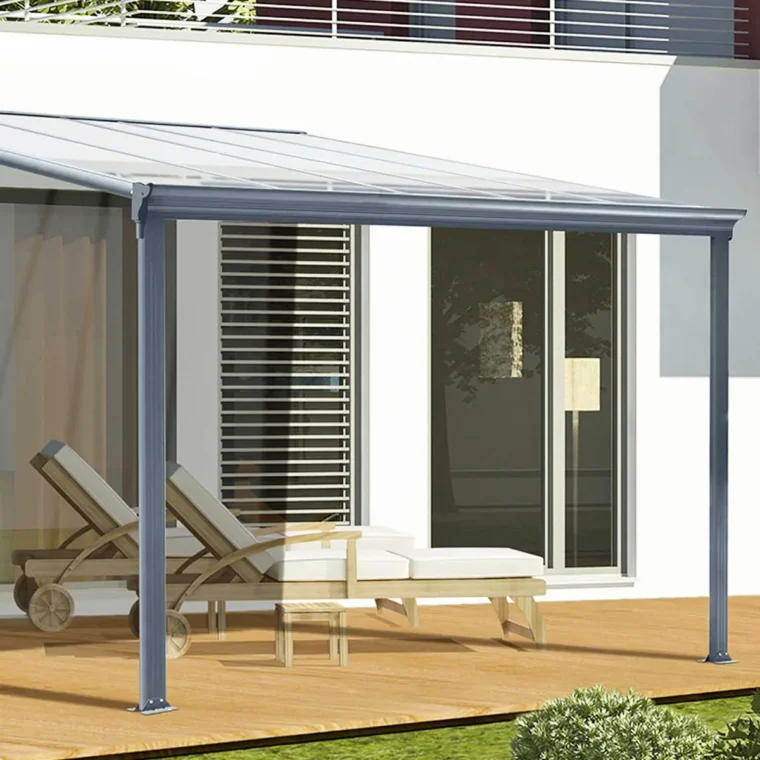
In much of Canada the outdoor living calendar is cruelly brief: long winters bury the deck under snow load, spring arrives wet, and the warm weeks that follow are interrupted by sudden rain and harsh midday sun. A patio cover is one of the few additions that pushes back against all of these limits at once, turning a fair-weather surface into something closer to an all-season room.
The problem is rarely the deck itself. It is the sky above it, which alternates between too much water, too much weight and too much light depending on the month.
A well-designed roof does not fight the weather so much as redirect it. Understanding how that redirection works explains why certain materials and shapes have become standard across Canadian backyards.
Solving two opposite wishes in one piece of plastic
Most shelters force a trade. A solid roof keeps the rain off but plunges the space into gloom, while an open pergola lets the light through but offers no protection when the clouds open.
A clear polycarbonate panel resolves the contradiction by behaving like a window laid flat overhead.
Think of it the way sunglasses with a clear coating work: you still see the world in full brightness, but the invisible, damaging part of the spectrum is filtered out before it reaches you. The panel does the same job for the whole deck.
This is why a clear panel roof feels so different from a canvas awning. You keep the open, sunlit mood of an uncovered yard while gaining the dryness and sun safety of an indoor space.
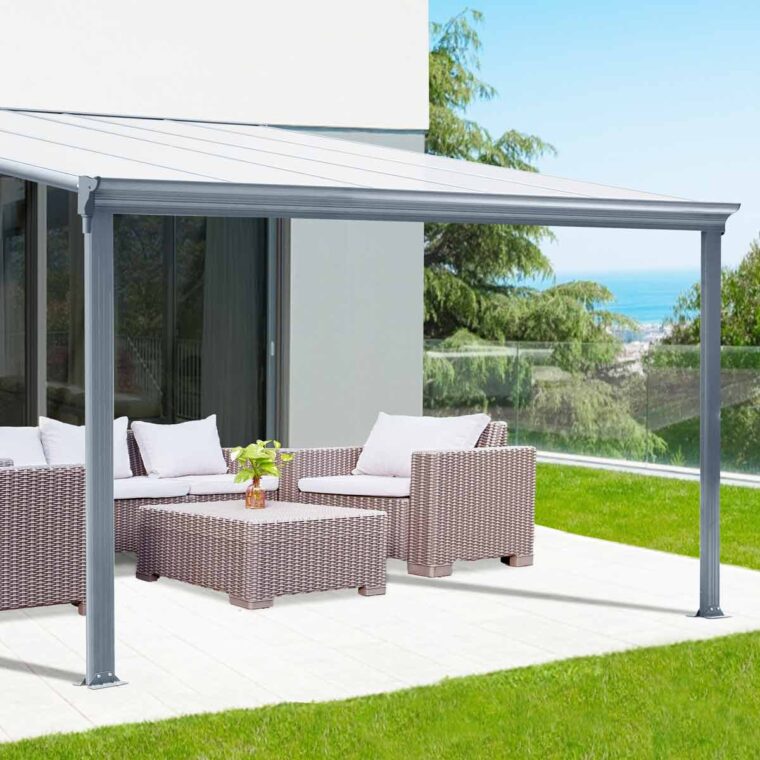
Why the roof is tilted, not flat
Rain and snow are heavy, and standing water is the enemy of any overhead structure. A flat roof invites pooling, and pooled water freezes, expands and eventually finds every seam.
The slope on a patio cover is a drainage strategy disguised as a design choice. Gravity pulls water and melting snow toward the low edge, so nothing collects long enough to add weight or work its way underneath.
The same geometry matters even more in winter. A pitched surface encourages snow to slide rather than pile into the dense, heavy load that flat roofs must carry, the single biggest hazard for any structure in a snowy climate.
The frame that refuses to rust or rot
A roof is only as durable as what holds it up, and Canadian conditions are unusually punishing. Wet seasons, road salt carried on the wind and the constant freeze-thaw cycle of spring and fall attack ordinary building materials relentlessly.
Aluminum is the quiet hero here. It forms a thin, self-renewing oxide skin that seals the metal against moisture, so an aluminum patio cover does not rust the way a steel frame would after a few wet winters.
It is also light, which matters more than it first appears. A lighter frame carries the clear panels without heavy footings and puts less strain on an attached wall, yet it stays rigid enough to hold its shape through wind and snow.
Compare that to the alternatives over a decade outdoors. Steel corrodes where the coating chips, and wood swells, splits and rots in exactly the damp, salted, freeze-thaw conditions Canadian decks endure.
Sorting covers by the panel overhead
The clearest way to understand the options is to classify them by what the roof is made of, because that single choice decides how much light reaches the space below.
- Clear or translucent panels: maximum daylight, gentle warmth, full rain and ultraviolet protection
- Solid panels: deep shade and a cooler space, at the cost of brightness
- Adjustable louvered roofs: tilting slats that trade light for shade on demand, with more moving parts to maintain
Each sits at a different point on the light-versus-shade spectrum. A clear panel design leans toward brightness, which suits the northern reality of short days and a long appetite for sunlight whenever it appears.
Sorting covers by how they stand
The second classification is structural: how the cover meets the ground and the house. This decides where it can go and how it manages water at the edges.
A wall-attached cover borrows the house for support, extending the roofline outward so rain drains away from the building. It is efficient and creates a seamless indoor-to-outdoor flow, but it depends on a sound wall to anchor it.
A freestanding cover stands on its own posts and can be placed anywhere in the yard, over a detached patio or a hot tub far from the house. It needs four points of support rather than two, yet it frees the design from the building entirely.
Both can carry the same clear polycarbonate panels and the same drainage logic. The choice is about site and intent, not the physics of staying dry.
What the trade-offs really cost
No cover is without compromise, and honesty about that helps buyers choose well. Clear panels let warmth build on a still summer afternoon, so the brightest covers can feel warmer than a solid roof that throws cool shade.
The benefits, weighed against that, are considerable. A bright, dry deck that blocks ultraviolet rays protects furniture, flooring and skin while extending the usable season at both ends of the year.
For most homeowners the calculation favours light. Where the sun is scarce and the season is short, keeping the daylight while losing the rain is exactly the bargain a patio cover is built to strike.
A Prairie example of the principle in practice
Consider a family near Regina who covered a ten-by-ten-foot deck with a clear panel aluminum patio cover. Through the wet spring their furniture stayed dry, and the polycarbonate kept the seating area bright rather than cave-dark.
When winter arrived, the sloped roof let snow slide clear instead of accumulating, and the frame showed no rust despite the salted, freezing air. Each part addressed a different threat in the same weather.
Reading a backyard the way the weather does
The lasting lesson is that a good patio cover is not one clever feature but several working in concert. Clear panels manage light, the slope manages water and snow, and the aluminum frame manages corrosion across the years.
For a Canadian deck caught between long winters and a fleeting summer, that combination is what turns an exposed platform into reliable outdoor space, which is the real promise behind every well-built patio cover.
