
Great British and Irish Journeys: Speeding through the North Sea Coast and the Lush Midlands
The coastline does not always look like a boundary. Sometimes it feels like a suggestion — a thin shift in colour where water presses against land without fully interrupting it. Mornings near the North Sea arrive quietly. Light spreads without brightness. Wind moves before people do.
Further inland, the fields hold a different stillness. Grass bends slowly. Hedgerows divide space without sealing it. Even when trains pass through, the land seems to absorb the motion rather than react to it.
There is no obvious beginning to these journeys. Movement seems to have started earlier, somewhere out of sight.
Where Green Opens Without Explanation
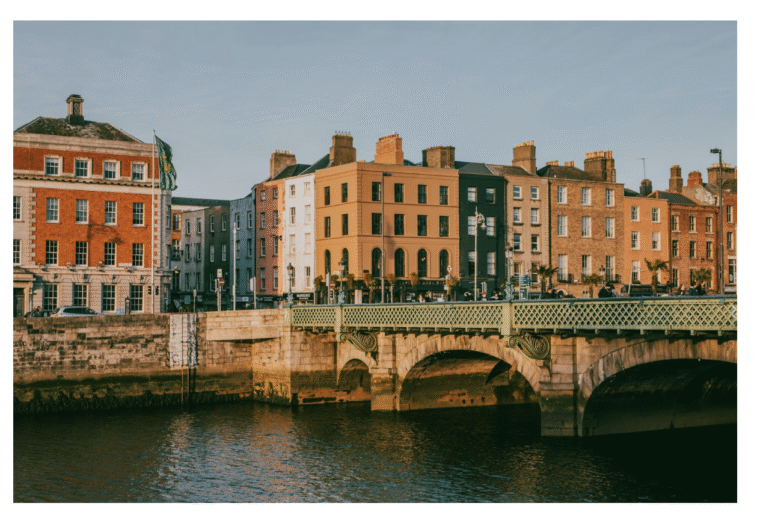
In Ireland, the landscape often feels unfinished — not incomplete, but open. Along stretches that follow the Dublin to Galway train, fields widen into uninterrupted green that appears almost provisional, as though it could continue indefinitely. Stone walls surface briefly and then fall away again. Low houses cluster without urgency.
The train moves steadily, though the speed feels internal rather than visible. Reflections gather in the window, layering sky over pasture. Stations appear without announcement — a platform, a sign, a small group waiting — and then dissolve behind hedges.
There is no midpoint where coast becomes midland. The terrain shifts so gradually it feels accidental. The air seems to thicken slightly, then clear again. Nothing insists on distinction.
Northbound Without Drama
Crossing back toward Britain, the change is subtle. Farmland narrows briefly near towns, then widens again beyond them. Hills gather in the distance but never surge forward. On routes like the train from London to Edinburgh, the landscape unfolds in sequences that feel familiar even when they are not.
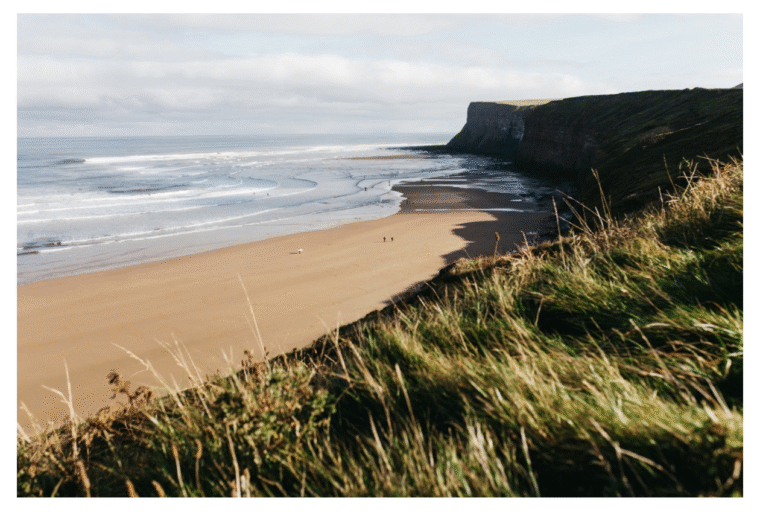
Fields repeat in muted tones. Stone farmhouses stand at slight angles against wind. Occasionally, the North Sea reappears — a pale line under a sky that seems wider than necessary. Then it disappears again behind industry or slope.
The journey does not escalate. It continues. Reflections blur details just enough to make certainty difficult. You may pass through towns without registering their names.
Speed compresses distance, but not sensation.
Cities Emerging in Fragments
Edinburgh does not present itself fully formed. It gathers in partial views — a rise in elevation, a suggestion of stone, a spire glimpsed between buildings. The castle feels less like a climax and more like something that has been there all along.
Galway behaves similarly. Streets narrow almost imperceptibly. Harbour water darkens as evening settles. Neither city demands attention; both seem content to be encountered gradually.
Between them, the countryside refuses to organise itself into categories. Coast blends into meadow. Meadow blends into hill. The sky remains constant enough to make the shifts feel understated.
The Stretch That Remains
Later, it becomes difficult to distinguish which landscape belonged to which country. Was the horizon broader along the North Sea, or did it feel just as wide in Ireland’s interior? Did the fields seem greener in one place, or simply closer?
What lingers is the sensation of forward motion through space that never fully closes. Rails fixed against land that changes only slightly. Water appearing briefly and then withdrawing without explanation.
There is no dramatic divide between island and mainland, between coast and midland. Only gradual alteration — a shift in tone, a different angle of light, a hedge giving way to open pasture.
And somewhere along that stretch, the movement continues quietly, without emphasising origin or destination — just fields, occasional water, and sky widening and narrowing again as if breathing on its own.
